


Somebody's cousin is clearing six figures at 26 and you are at $46,000 wondering what he knew that you did not.
The trades are hiring, genuinely. The nine here pay $90K to $104K, and no degree sits between you and any of them. What the posts skip is that entry stretches from a 6-to-10 week operator course to a one-to-three year wait just for an elevator intake, and the days include storm weeks, plant shutdowns, second shift and heat-wave call.
So the decision is not which number is biggest. It is which trade's tuition, years, schedule and wear on your body fit the life you are actually living, whether you want a license that travels with you or a paycheck inside twelve months.
By the end you can sort all nine by fastest paid start, highest ceiling, best shot at your own truck and steadiest nights at home.
Then you will make one call, and it will not be to a school.
Quick Tips Before You Start
Call the program first
Ring the apprenticeship office or state licensing board before you ring a school's admissions line.
Ask what employers require
Two local contractors will tell you which certificates they actually check and which ones they ignore.
Price the tools, not just tuition
Apprenticeship routes still run $0-$2,000 in hand tools, boots and books before day one.
Ask about the schedule in August
The on-call rotation and the attic temperature are part of the salary, so ask about them out loud.
Check how you feel on a ladder
Any trade that works at height should be tested with one paid climbing class before you commit years.
The licensed trades you can own

Three of the nine pay $91K to $96K and all three put a license in your name. That matters more than the salary column, because a license is the one piece of training here that stays with you when you leave an employer.
These are also the slowest three to enter. Four to five years before the journeyman card, in most cases. The point of starting here is that those years are paid work, not tuition, if you take the apprenticeship door instead of the school door.
1. Electrician pay starts in the apprenticeship, not after
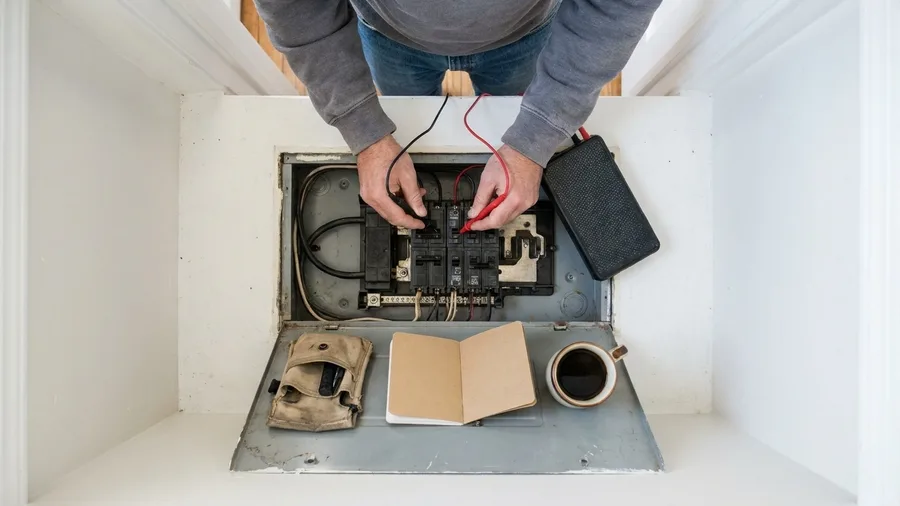
Before you write a tuition check for electrician school, run the numbers in two columns: money out and money in. Most people assume the money has to go out first. Here the meter runs the other way from the first week.
The setup is simple enough to copy exactly. Left column, what the first year costs: $0 to $2,000 for tools and books, nothing for tuition, because you are not a student, you are an apprentice drawing a wage. Right column, what it brings in: roughly $18 to $26 an hour from week one, and $96K is the typical journeyman figure once the four-year apprenticeship is behind you. The only line on the left that survives is a pair of boots.
That gap is the mechanism. Four years of paid work instead of four years of tuition means you build income while you train instead of draining savings first. Someone starting from a $40-50K job does not have to save up $15K before the clock starts. The clock starts on the first day of paid work.
the hours. The four-year apprenticeship split between journeyman and master license is set by your state licensing board, and requirements differ by state. Call that board and ask how many hours a journeyman license takes and how many more the master adds. Do not take a school's quoted number for it. The board is the one holding the actual rulebook.
Get that in writing before anything else.
The work itself is indoor and outdoor, mostly home nights with some on-call weeks mixed in. Knees and back take the wear here rather than height or confined space, so if the knees are already a problem it is worth naming that early instead of a year in.
What the four years actually buy you is a license that belongs to you, not to the contractor who hired you. It goes with you to the next employer, and eventually it can go into a truck of your own. That is the asset no degree on this list hands over so cleanly: paid to learn, and the paper at the end is portable.
So the first move is a phone call, not a deposit. Ask the state licensing board for the hours, ask the local apprenticeship program when the next intake opens, and confirm both before you sign anything a school puts in front of you.
💡 Tip: Ask the board, not the school, how many apprenticeship hours your state requires. The school has an incentive to quote a bigger number.
| Trade | Typical pay | Time to first paid job | Up-front cost | License | Schedule |
|---|---|---|---|---|---|
| Electrician | $96K | 4-5 yr paid apprenticeship | $0-$2K tools/books | State journeyman + master | Indoor/outdoor, some on-call |
| HVAC technician | $91K | 1-2 yr school or apprenticeship | ~$15K school | Varies by state | Summer heat-wave on-call |
| Plumber | $95K | 4-5 yr paid apprenticeship | $0-$2K tools/books | State journeyman + master | Nights, emergencies, crawlspaces |
| Millwright | $96K | 4-yr apprenticeship (often union) | $0-$2K tools/books | None statewide | 12-hr plant shutdowns, travel |
| Heavy equipment operator | $92K | 6-10 weeks | ~$6K course | None | Outdoor site, seasonal in cold states |
| CNC programmer | $90K | ~12 months | ~$8K certificate | None | Second shift, indoors |
| Lineman | $101K | Line school + utility apprenticeship | $10K-$20K line school | CDL + utility program | 3-7 day storm duty, away |
| Elevator technician | $104K | 4-yr paid apprenticeship | $0-$2K tools/books | Contractor/union list intake | Shafts, heights, confined space |
| Wind technician | $93K | 1-2 yr certificate | ~$12K | None | Climb 260-300 ft, rotation, travel |
2. HVAC pays $91K for on-call summers and 100°F attics
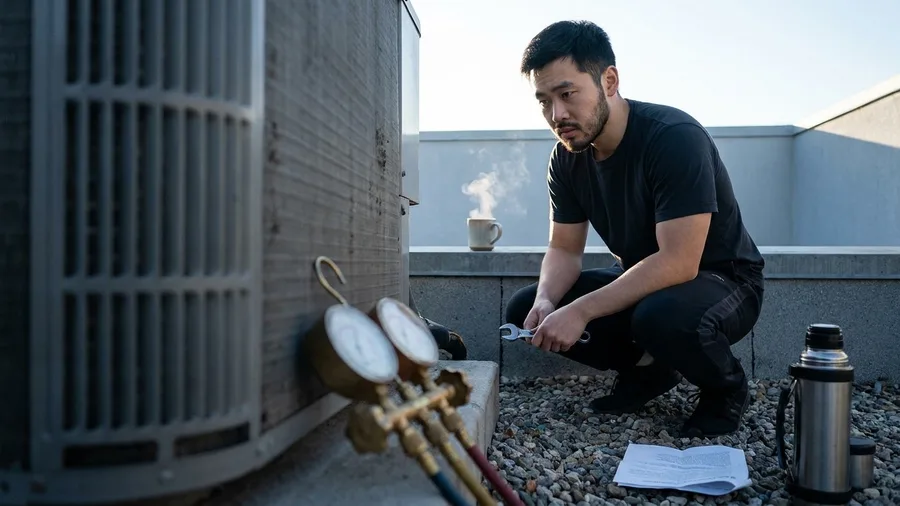
Take the school's $15K HVAC program and set it beside the paid apprenticeship before you enroll. Most people pay the $15K without checking whether the cheaper door exists.
The numbers: HVAC runs an average of about $91K, and the two-year program sits near $15K, while a paid apprenticeship gets you learning on someone else's dime. Before either one, call three local contractors and ask which certifications they actually require and which they will pay you to pick up. That call costs nothing and can delete a line item or two off the tuition bill.
What the $91K actually buys is the part the brochure leaves out. Summer heat-wave on-call rotation becomes your busy season, meaning evenings and weekends go to whoever's AC quit at 9pm, and the work setting is attics and crawlspaces that run past 100°F in July. Your knees and back carry that schedule. This is not a steady 9-to-5.
📞 Your First 60 Days Before Any Tuition Check
Pick three from this list
One fast door, one licensed trade, one height trade – that is enough to compare.
Call the apprenticeship program or union hall
Ask when intake opens and what the starting wage is from week one.
Call the state licensing board
Get the required apprenticeship hours in writing for electrician and plumber.
Ask two local employers what they require
Their answer, not a catalog's, tells you which certificates matter.
Test the working condition
Book one climbing class, ride-along or site visit before you commit years.
Price the tools and boots
Budget $0-$2,000 beyond tuition so month one does not land on a card.
3. A plumber's $95K license can become your own business
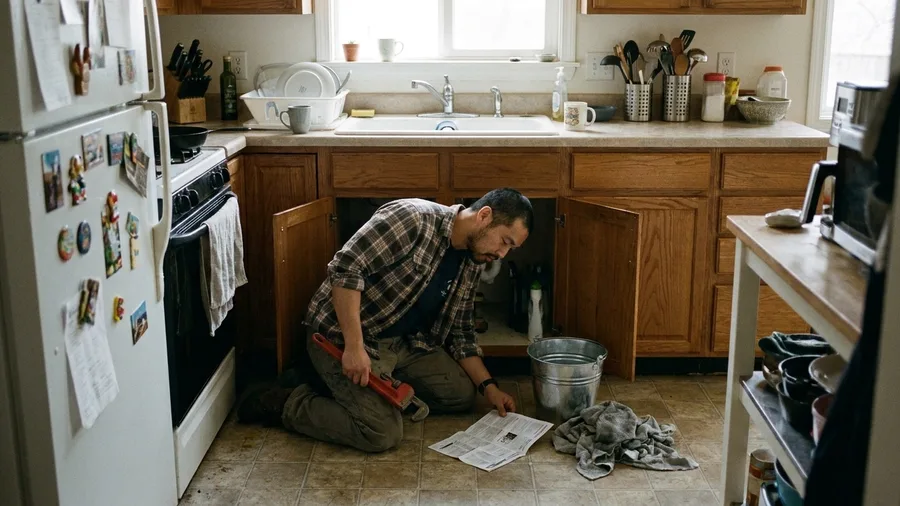
The belief is that plumbing caps out at $95K typical pay and a truck you keep borrowing against. That number is real, but it is what the work pays a tradesman on a payroll, and plumbing is one of only two trades here that can turn the same work into a business you own. Owning the truck and holding the call-out list is where the ceiling stops being set by somebody else's rate sheet.
The road there costs $0 to $2K in tools and books, not tuition, because the apprenticeship pays roughly $18 to $26 an hour while you learn. It runs four or five years, then two state licenses: journeyman, then master. Requirements differ by state, so the hours that count get confirmed at the state licensing board, not with a school that quotes a number and wants a check.
Do not skip the trade because of sewers and crawlspaces. The first two years are the worst of that work, and it is the part you eventually pay someone else to take; if nobody takes it, the call still rings at 11pm and the plumber is you.
The honest math on the business: a one-truck operation inside 5 to 8 years swaps a steady paycheck for income that moves with jobs and call-outs, and risk that moves with the truck, insurance and the slow weeks in between. The other trades mostly keep you working for a contractor or a utility. That is not a worse life, but it is a different one, and it is the difference worth knowing before you sign up.
💡 Tip: Ask the licensing board how many master-level hours you need, not just journeyman. That number decides how soon the truck is realistic.
⚠️ COMMON MISTAKE
Paying tuition for a job that would have paid you
Electrician, plumber, millwright, lineman and elevator technician all have paid apprenticeship doors. Calling a school first is the expensive order. Call the apprenticeship program, then compare whatever the school tells you against it.
Industrial and machine work

The next three split hard on speed. One takes four years, one takes a single course under three months, and one takes about a year with no apprenticeship at all.
If your problem is that the money runs out before the month does, the fast doors matter more than the ceiling. If you can hold on for a few years, the slow door pays better and travels with you.
4. Millwrights earn $96K in 12-hour shutdown runs

The first time I walked a millwright through a paper mill during a shutdown, the floor was a forest of tagged pumps and the noise never stopped – and he told me to watch the clock, not the work. His crew was on 12-hour days for eleven straight, then off for a week when the plant came back online. The $96K typical pay doesn't arrive in tidy monthly deposits; it comes in intense bursts, and you review the year that way, not the month.
Four years in an apprenticeship, usually through a union hall, buys the precision-alignment skill that makes those dirty jobs paying six figures possible. So the check-in is a yearly one: count how many shutdown weeks you actually worked, then look at what your hourly rate paid out across travel and overnight stays.
Then ask where your body is heading – confined-space alignment is young-person work, and inspection and supervision are the exits.
💡 PRO TIP
The cheapest move is the phone call
Before any school gets a check, call the apprenticeship program and the state licensing board. One afternoon of calls can save you $15,000 and four years.
5. The quickest $92K here is a $6K operator course

The heavy equipment operator route – a 6- to 10-week course at about $6K, no apprenticeship wait, first paid job of the whole list. If you need income fast more than you need a high ceiling, this is the door, and it opens quicker than any other trade here. The $92K is the top of the range; entry is closer to $45K to $55K, and you should plan against that lower number from day one.
Where the willpower comes out is the setup, and it's one afternoon of work. Before the course starts, open a separate account for the $6K and set an automatic transfer of whatever you can spare each week – $75 is fine, $200 is better – so the tuition isn't a lump you're still deciding about in month two. Then set a calendar reminder for the first of every month after you're hired: log your hours in a simple note and check the winter forecast for your state.
Why automate the tracking instead of trusting yourself? Because outdoor site work slows in cold states, and the slowdown hits your hours before it hits your mood. A running hour log tells you in October whether January is going to be thin, and that's the moment to line up indoor work or overtime rather than discover it on a short check.
Leave the rest alone. No state license to carry means no renewal calendar, no continuing-education tab – the course is cheap and quick to enter, and the trade-off is that the lower start and the seasonal slowdown are the price. Watch the log, not the ceiling.
💡 Tip: Ask the school which machines their graduates actually get hired on. Excavator and bulldozer seat time is what most entry listings ask for.
6. CNC programming pays $90K indoors with no apprenticeship

$8,000. That's roughly what the one-to-two year CNC certificate runs, and it buys the one thing the operator course can't: no apprenticeship wait and no weather. Most people don't walk into a programming chair, though – they spend their first year on the shop floor as operators, learning the machines by running them, and the programming follows the floor time.
I've watched a machinist friend make that exact trade. He turned down an outdoor job that started higher and took the certificate instead, and his first two years were second shift – 3 p.m. to 11 p.m. – standing at a mill, in a building kept at 68 degrees while it sleeted outside. He said the standing was the surprise, not the shift.
The $90K typical pay is the bottom of this list, so understand what the money is buying: the cleanest conditions of the nine. No heights, no storm duty, no crawling through attics in July, no 12-hour shutdown sprints. Quiet, indoor, predictable – and a start time that keeps you away from dinner for a couple of years.
The honest comparison is against the outdoor trades that pay a few thousand more. Those dollars come with weather and travel and a shorter working season in cold states; the CNC dollars come with a second-shift start and the same knees-and-back wear from standing.
So the trade-off for skipping the apprenticeship isn't laziness or a shortcut – it's a longer school stretch than the operator course and a lower pay ceiling in exchange for steadier conditions. If your body is already telling you it's done with cold and heights, low-stress six-figure jobs are not a small thing.
The next step is to ask the local shops before you enroll: which certificate do the programmers on their floor actually hold, and do they hire off the certificate or off floor experience? That answer changes whether the $8,000 buys you a chair or just a better application.
Utilities, heights and the hardest door

The last three pay the most on this list and ask the most in return: height, weather, time away and, in one case, years of waiting for a slot that may not open.
Read these with the body in mind. The pay premium over an electrician is real, but it is bought with nights away and weather nobody else works in.
7. Lineman's $101K comes with storm duty away from home
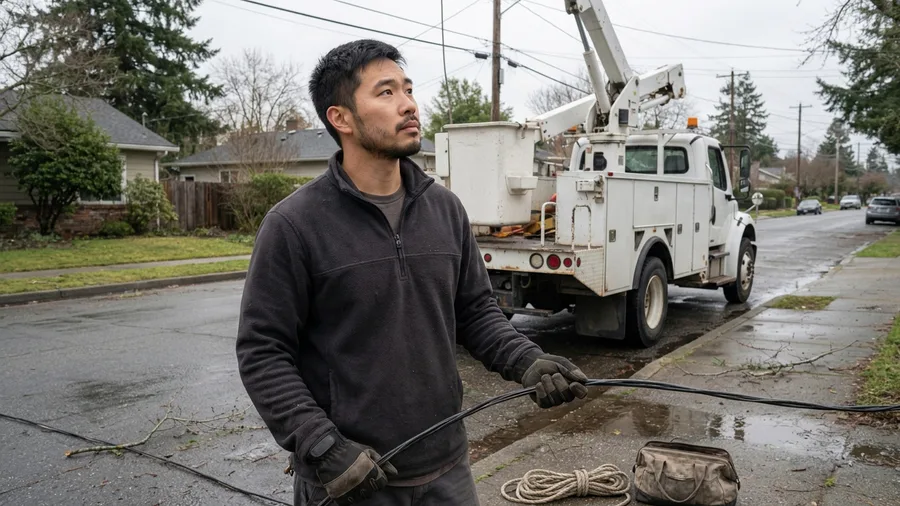
The number looks like a reward for danger, and the truth is a little less dramatic and a little more demanding. That $101K is not paid because the work is braver than the work beside it. It is paid because the job asks for days you cannot plan around, at heights, in the worst weather the year has to offer.
Line school runs $10K to $20K, but the paid route is a utility apprenticeship, which means earning while you learn instead of writing a check first. Storm duty is the part nobody can rehearse in a classroom: 3 to 7 days away, sometimes out of state, called with little notice, climbing in conditions most people watch from a window. A commercial driver's license and comfort on a pole are usually the entry tickets.
If that schedule does not fit the life you are building right now, the honest move is to hold it, not to rule it out. Start by calling the utility apprenticeship office and asking how often they take on new hands and what the on-call rotation actually looks like. There is no penalty for waiting a year while you build a different skill. Inspection and supervision are the exits from the pole when the body has had enough.
💡 Tip: Get the commercial driver's license started early. Most utility listings screen on it before they ever look at your climbing.
Three ways people lose money on the way in
8. Elevator work pays the most but is hardest to enter
It can sting to see the highest number on the list and learn the door is barely open. That feeling is real, and it is not a sign you are doing this wrong. Elevator work typically pays $104K, the top of the nine, and the reason it pays that much is partly the same reason it is hard to walk into.
The apprenticeship is paid and lasts four years, but the slots are few and come around infrequently. Hiring runs through contractor and union lists, and applicants commonly wait one to three years before a spot opens. Moving to another region is a real strategy for shortening that wait, which is a cost in itself. The workday is shafts, heights and tight space.
So the trade-off is honest: the highest pay sits behind the narrowest intake, and that is a structure problem, not a willpower problem. If you can afford to keep your name on the list while you earn elsewhere, it is worth leaving on the table. If you need income this year, put the energy into a door that opens faster and revisit this one later.
Should You Wait for an Elevator Slot?
Waiting periods reflect typical contractor and union list intake, not a promise.
9. Wind technician's $93K is paid in heights and travel

Cold, loud, and windy enough that you notice every gust, and the climb is the easy part compared with doing real work once you are there. The towers run 260 to 300 feet, and technicians climb them in all weather at remote sites, on rotation schedules that put you away from home for stretches at a time.
Typical pay is $93K, and the usual entry is a one-to-two year certificate at about $12K. If that number makes you wince, the small-start version is worth taking seriously: before you commit a dollar to a program, spend an afternoon at a community college information session or call a local wind employer and ask what they require. That costs you bus fare and an hour, and it tells you whether the travel rotation fits the people in your life. A single site visit is cheaper than a semester you drop.
The reason a small first step still works is simple. Every hour you spend learning the real schedule before enrolling saves you from paying $12K for a life you did not actually want. Nothing about this trade punishes starting slow. The certificate is the same whether you begin it this fall or next spring.
The body is the limit over the long haul. Inspection, supervision and remote monitoring are the ways out of the harness, and they are worth asking about in the same first conversation. Ask what the rotation really looks like, not what the brochure says. Then decide whether the height and the travel are a trade you are willing to make.
Frequently Asked Questions
Do I need a degree for any of these trades?
No. All nine are entered through an apprenticeship, a certificate or a short course, and none of them requires a four-year degree. The licensed trades – electrician, plumber – require state journeyman and master licenses, and those are earned in hours worked, not in a classroom.
Which of these gets me paid the fastest?
The heavy equipment operator course. Six to ten weeks and roughly $6,000 gets you to a first paid job, faster than anything else here. The honest catch is that entry pay lands closer to $45K-$55K and climbs toward $92K with seat time and the machines you can run.
How much do the apprenticeships actually pay while I train?
Roughly $18 to $26 an hour from week one on the electrician, plumber, millwright, lineman and elevator routes. That is the reason the apprenticeship door beats a $15,000 school program for most people: you build income while you train instead of draining savings first.
Can I tell which trade will let me work for myself?
Yes – plumbers and electricians are the pair. A one-truck plumbing business within five to eight years of getting the master license is a realistic path. The other seven mostly mean contractor or utility payroll, so pick accordingly if self-employment is the goal.
What if I am scared of heights?
Then lineman, wind technician and elevator technician are not the shortlist, no matter how much they pay. Electrician, plumber, HVAC and millwright still pay $91K to $96K, and the trade-off there is knees and back rather than the pole or the shaft. Test the condition with one paid class before you commit.
Should I take a school program or hold out for an apprenticeship?
Call both before you decide anything. For the licensed trades, the apprenticeship is usually the better financial route and the wait is the real cost. For operator and CNC, there is no apprenticeship to wait for, so the short course is the door. The board and the apprenticeship office will give you the numbers that matter to your state.
One Call This Week, Not Nine
Make the call by situation, not by the number. Need income this year? The heavy equipment operator course runs 6 to 10 weeks at about $6K and puts you in a seat this year, though entry lands around $45K to $55K with winter slowdowns. Want the highest ceiling and can wait out a one-to-three year intake, maybe relocate? Elevator technician at $104K, with lineman at $101K if you would rather trade the wait for storm duty. Want your own truck? Plumber, $95K typical, a four-to-five year paid apprenticeship, and a one-truck business inside 5 to 8 years. Want steady nights at home? Electrician, $96K as a journeyman, mostly home, and the apprenticeship pays you.
You heard the trades were desperate. They are. Intake, tuition and schedule still decide which of the nine is open to you, and no amount of demand changes that.
So before a school sees a check from you: call the apprenticeship program and the state licensing board. Confirm the hours, the next slot, the certifications. The school call is second. Somebody's cousin cleared six figures at 26, and the next one can be you, without the guessing.
Make the call before you write the check
Scroll back to #1 and write down the apprenticeship office and the state licensing board number. Ring both this week and ask for the hours and the starting wage in writing.