
These 12 ‘Dirty’ Jobs Pay More Than Most Doctors Make (And There’s a Massive Worker Shortage)


The bank app pings on a Thursday: the apprenticeship intake closes Friday at 4pm, and the tuition deposit is due the same week.
You are scrolling this because the paycheck runs out before the month does, and twelve trades that supposedly beat a doctor's salary sound like the exit door. Fair. But hold the comparison up to the light first. That $250,000 is an illustrative primary-care doctor figure, and it is the ceiling, not the floor. The doctor-beating money in these trades is owner income, offshore saturation pay, or a storm-overtime year, not what a helper clears in month one.
A dirty trade can be a genuine six-figure escape without a degree. It only works when the paid apprenticeship, the tuition, the wear on your body, your location, and whether the top of the range means a business or a badge all fit the life you actually have.
By the end you should be able to shortlist two trades by fastest paid entry, highest realistic ceiling, or best stability. Before you spend a dollar on school, one call to the local union or apprenticeship office and one to the state licensing board will tell you what the headline cannot.
Quick Tips Before You Start
Call the union hall first
A paid apprenticeship beats a $15,000 trade school almost every time; ask what the next intake date is before you pay anyone.
Get the wage in writing
Ask a prospective employer for their helper-to-journeyman pay scale, not the number in the job ad.
Ask about the body
Confined spaces, heights and night calls wear people out; ask a working tech how many years most people last.
Separate owner math from wage math
A $250,000 plumbing number carries a truck, insurance and unpaid hours. Compare it to a journeyman paycheck, not a salary.
Never pay for school before demand is confirmed
Have an employer or apprenticeship office tell you they are hiring before tuition leaves your account.
Building and Service Trades With Owner Upside
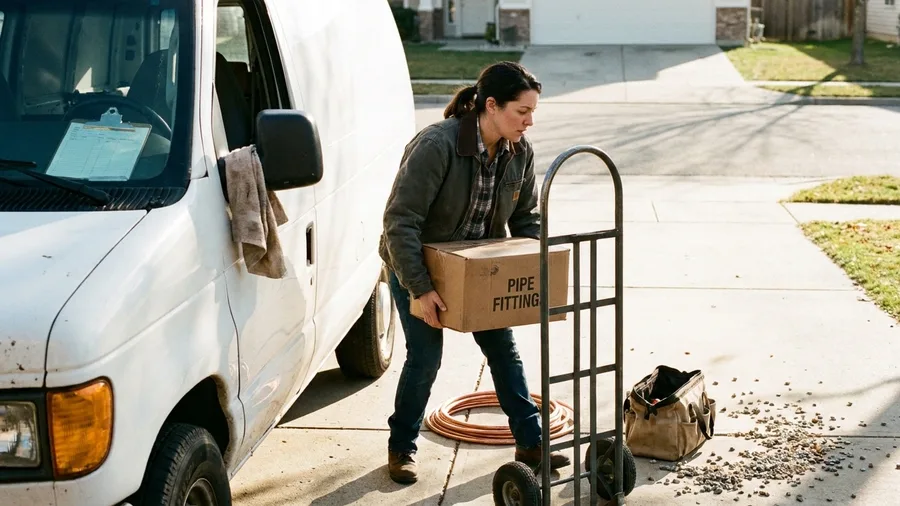
The first four trades are the ones a reader can realistically enter this year, and three of them share a structure worth understanding before the numbers. The wage is capped, the business is not.
A journeyman plumber or HVAC tech earns a solid paycheck. The person who owns the trucks and the phone number earns something else entirely – and carries the insurance, the licensing and the slow months that come with it. Every dollar in the owner column is bought with a business, not a badge.
1. Plumbers clear six figures by owning the truck
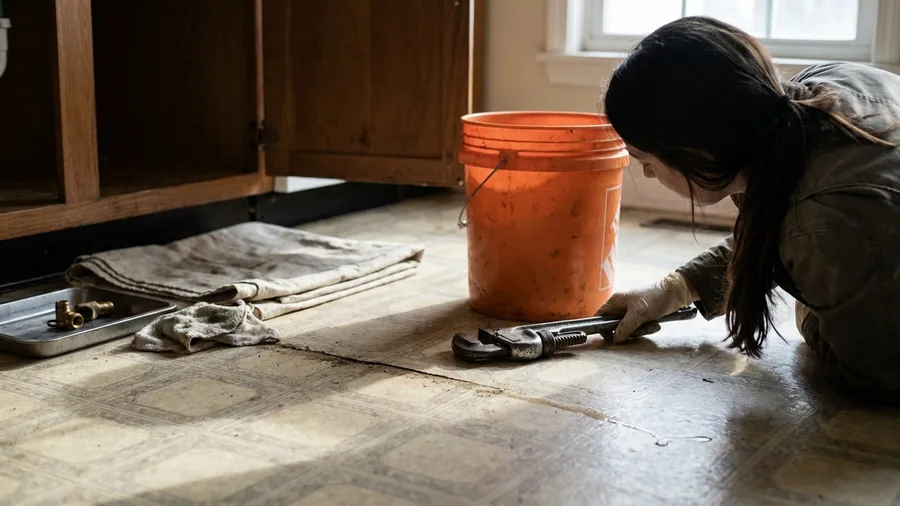
The call came in at 11:40 on a Tuesday night, and the guy on the other end had a basement filling with sewage. The plumber who answered had been asleep for an hour. That is the trade most people picture when they say plumbing: a wrench, a nasty smell, and a bill. What they miss is who is holding the invoice when the truck pulls away.
that a trade pays you a wage and a wage is all it ever pays. For plumbing that belief caps the story at the employee side, where the facts put pay somewhere between $60,000 and $120,000 a year.
Decent money. Not doctor money. The $250,000 primary-care anchor is not cleared on a paycheck in this trade.
But the truck changes the math. An owner with service trucks sells the work of several plumbers and keeps the margin on each call, and the owner range in the facts runs $150,000 to $300,000. The doctor anchor sits inside that band, at the top of it. That is business income with overhead attached: the truck payment, the liability insurance, the licensing, and the cost of finding the next customer. It is not a journeyman wage.
The route in takes time, and the timeline is the real gate. A plumbing apprenticeship runs four to five years, and it pays while you learn, which is the quiet advantage over a degree you finance. Then you hold a journeyman credential before you do independent service work or think about owning anything. Four to five years is not a headline. It is a plan.
The body pays part of the bill too. Sewer backups, crawl spaces, grease, emergency calls at hours nobody chooses – those on-call nights are baked into the wage, not added on top of it. The shortage everyone mentions means steady demand and an easier time getting hired. It does not mean a first-year plumber clears six figures.
So the reframe is this: plumbing is not one income. It is an employee income that tops out near $120,000 in the facts, and an owner income that can reach the doctor number at the top of its range – if you are willing to run a business, not just a drain snake.
Before you lean on the owner number, run the overhead against your own market: trucks, insurance, and a customer list do not appear for free. One plain call to a local plumbing union or apprenticeship office will tell you when the next intake opens, and that is the step worth taking this week.
💡 Tip: Ask the apprenticeship office how many hours of the first year are sewer and drain calls. It tells you more about the job than any brochure.
| Trade | Employee pay | Owner/top pay | Entry route | Dirty reality | Can clear $250k? |
|---|---|---|---|---|---|
| Plumber | $60k-$120k | $150k-$300k owner | 4-5 yr paid apprenticeship | Sewage, crawl spaces, on-call nights | Owner side, top of range |
| HVAC tech | $50k-$100k | $150k-$250k owner | 6-24 mo school or apprenticeship | Attic heat, refrigerant, weekend calls | Top owner pay only |
| Elevator mechanic | $80k-$130k | Higher with overtime and benefits | 4 yr apprenticeship | Grease, pits, confined shafts | No, unless you own a company |
| Sewer/drain tech | $45k-$90k | $150k-$300k owner-operator | On-the-job, then equipment | Raw sewage, confined spaces | Owner-operator territory |
| Power lineman | $70k-$150k base | $200k+ with storm overtime | 3-4 yr apprenticeship | Ice, heights, live lines, travel | No – tops out below the anchor |
| Commercial diver | $80k-$250k | $300k+ saturation offshore | 5-7 mo dive school, $15k-$30k | Cold water, pressure, welding arcs | Yes, at saturation experience |
| Offshore roustabout | $60k-$120k | $180k-$250k toolpusher | Safety training, fitness | Mud, heat, 14/14 rotations | Top toolpusher pay only |
| Underground miner | $60k-$110k | Rarely approaches $250k | 6-12 mo training | Dust, diesel, low ceilings | No |
| Biohazard cleaner | $40k-$80k | $100k-$250k owner | Weeks of certification, PPE, insurance | Blood, odor, other people's worst day | Top owner with contracts |
| Embalmer | $50k-$90k | $120k-$250k owner | 2-4 yr mortuary school | Chemicals, grief, on-call deaths | Owner side only |
| Wastewater operator | $50k-$85k | Management, plus pension | On-the-job, state certification | Sludge, odors, night shifts | No |
| Boilermaker | $60k-$110k | $150k with overtime | 4 yr apprenticeship | Confined spaces, heat, heavy steel | No – $100k short |
2. HVAC techs trade attic heat for $100k+

HVAC is the building trade you can enter faster than plumbing and for a real tuition bill: a 6-to-24 month program runs $5,000 to $15,000 and gets you earning sooner, or you skip the school and take a paid apprenticeship instead.
Working technicians earn roughly $50,000 to $100,000 diagnosing and repairing heat pumps and aging systems that keep failing, which is why the phone keeps ringing and the job keeps existing whether or not the economy is kind.
The $150,000 to $250,000 figure belongs to the contractor who owns the vans and the contracts, and the top of it sits right at that doctor comparison only for the owner running the business, never for the person on the ladder with a gauge manifold.
The job itself is a July afternoon in an attic that reads 130 degrees, refrigerant burns, roof units in the rain, and the Saturday call that pulls you off the couch – the body and the calendar absorb that cost quietly.
Before you pay a school a dime, call three local outfits and ask whether they hire helpers with mechanical aptitude and a clean driving record, because those two gates decide who gets the paid slot long before any certificate does.
3. Elevator mechanics earn steady pay in grease
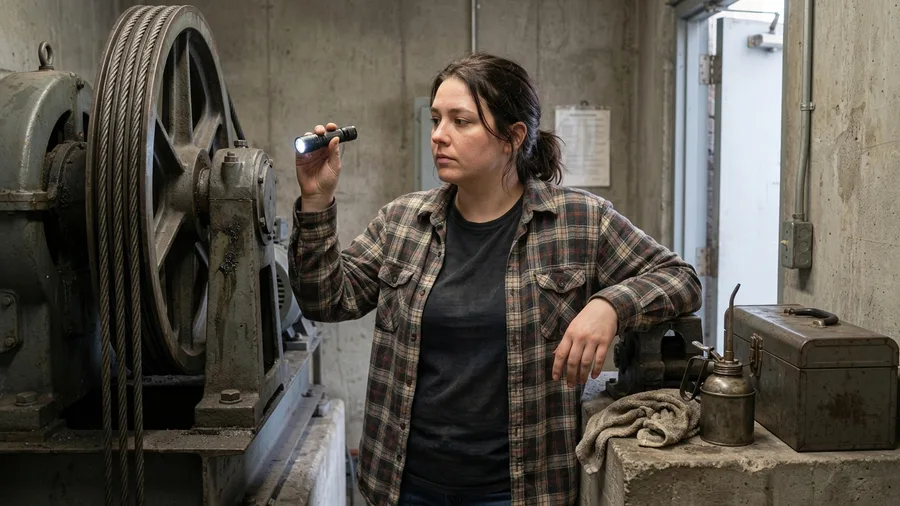
Union elevator mechanics earn $80,000 to $130,000, and overtime plus benefits push total compensation higher – but that is a career wage, not the $250,000 doctor anchor. The path to the anchor runs through owning a service company, not through the union card.
The structure to copy is the apprenticeship-to-journeyman track, and it works like a fixed plan you follow rather than a gamble: a four-year apprenticeship, usually through a union or an independent program, is the only route in. Treat it as a schedule. Year one through four, you are paid to learn; you finish as a journeyman, and your pay climbs on a set scale instead of by negotiation.
The work itself is grease, machine rooms, pits, breakdowns, and confined shafts, and it is safety-critical with no room for a shortcut. The shortage is skilled-labor tight, which means steady demand – not a way around the four years. A call to the local elevator union tells you when the next apprenticeship intake opens; that date, not the headline, is your real starting point.
💡 PRO TIP
The employee column is the real wage
An owner's $200,000 carries a truck, insurance, licensing and slow months. Compare any trade's owner number to a journeyman paycheck before you decide the ceiling is the point – for most people, the wage is the income and the business is a separate, riskier job.
4. Sewer techs need their own truck to clear $150k
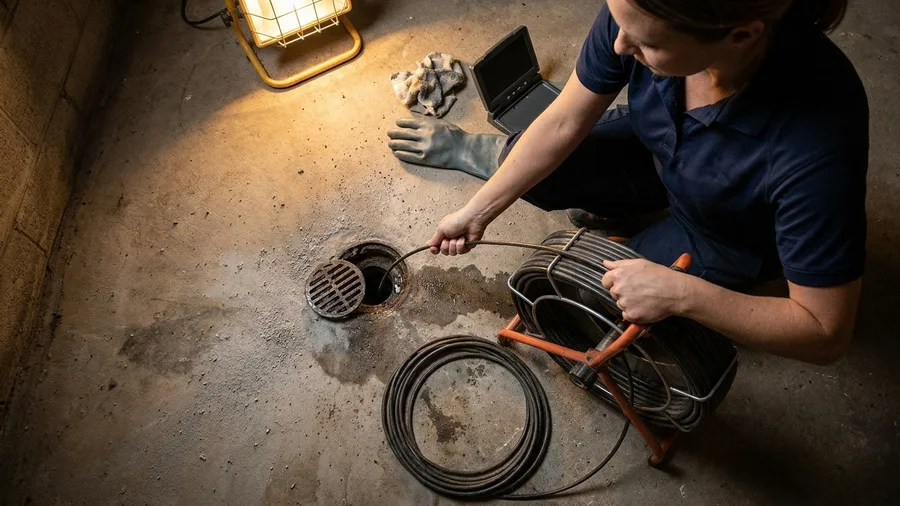
The fear with sewer work is that you spend your career in raw sewage and still make $52,000. That fear is fair at the employee level, and it is also not the whole picture. Employee drain techs earn roughly $45,000 to $90,000, and that range is real, caps out, and does not reach the $250,000 doctor anchor no matter how many emergency calls you run.
The owner-operator path is where the anchor sits: $150,000 to $300,000, with the $250,000 line reachable at the top of that range. Here is what the money is actually paying for. You buy the truck, the drain camera, the insurance, and the customer list, and the margin comes from being the one who shows up at 11 p.m. with equipment the caller does not own. The evening backup is gross work, but the emergency capacity is what turns it into business income.
Most people enter on the job, so the tuition is low and the apprenticeship clock is short compared with the building trades. The catch is that the employee range holds at $90,000, and a strong hiring market gets you hired, not paid like an owner. The owner premium is a business risk carried on your own balance sheet, not a wage.
Check this trade once a year against three numbers: your gross take-home after truck payment, insurance, and equipment upkeep; your on-call hours and what they actually paid; and the percentage of revenue from repeat customers versus one-time emergency calls. If repeat work is climbing, the business is building. If it is flat, you are buying your own overtime.
One more check worth keeping honest: how your body feels at the end of a bad week. Confined-space work with masks and raw sewage is the dirtiest on this list, and it wears on the spine as much as the stomach. A trade that pays $90,000 and lasts fifteen years beats one that pays $150,000 and lasts five.
Employee Wage vs Owner Income
Working for a company
- Predictable paycheck and overtime
- Someone else covers insurance and licensing
- Ceiling around $90k-$130k depending on trade
- Sick days and slow seasons are not your bill
Running your own truck
- $150k-$300k range in plumbing and sewer
- You buy the equipment, insurance and permits
- You chase customers and unpaid quotes
- One bad month comes straight out of your pocket
Outdoor and Offshore Danger Premiums
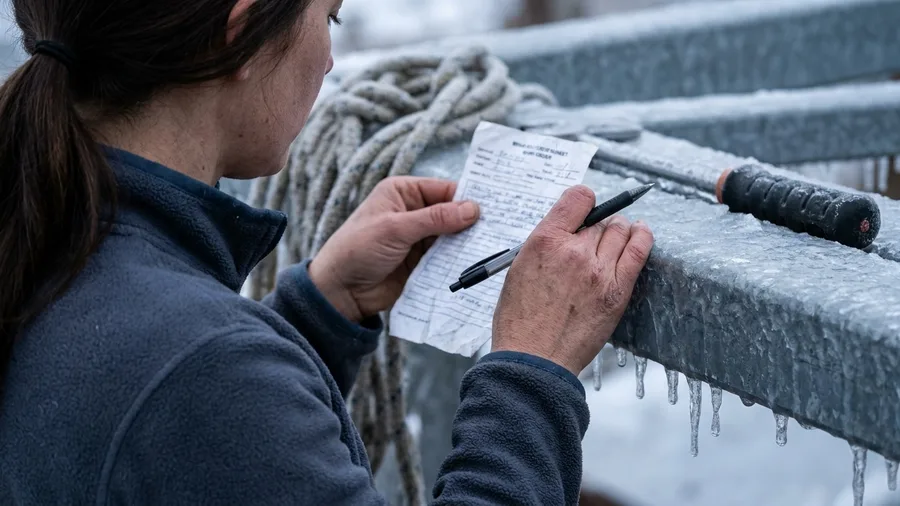
The next four trades pay more because fewer people are willing to do them. Every trade here is betting that the premium stays high and the body holds up, and two of them reach the doctor number at the top of the range.
The distinguishing feature is danger. Heights, cold water, pressure, and weather decide the pay, and no honest version of this list can pretend that premium is free.
5. Power linemen hit $200k in storm overtime

Three to four years is the apprenticeship, and that is the gate to line work, climbing school, and safety certification. Base pay for a power lineman runs $70,000 to $150,000, and storm restoration overtime can push the year past $200,000. The primary-care anchor is $250,000, so the biggest storm year in the facts still lands below it. Line work takes the emergency premium that sewer work earns indoors and moves it outside, where the danger is weather and voltage rather than a flooded basement.
The part nobody budgets for is that the six-figure year is overtime-driven and weather-dependent. A mild hurricane season is a lean year. A bad one is ninety days of fourteen-hour rotations in ice and heat, on poles, away from home. The electrocution risk is the reason the premium exists, and the pay follows the storms, not your plans.
Set the money up so the boom years survive the quiet ones. Decide a fixed monthly transfer into a separate savings account, keep the base salary as the budget line, and treat storm overtime as a bonus that only moves when you hit a threshold, say $10,000 in the account. Automate that transfer on the first of each month and leave it alone. The trade does not reward willpower; it rewards the person who already decided what happens to the check before it lands.
Then review the setup once a year, ideally at tax time. Look at two things: whether the overtime you actually worked was worth the hours it cost, and whether the storm fund is still covering your real monthly expenses. The danger premium is honest money, but it buys options for the future only if some of it stays saved.
6. Commercial divers can out-earn doctors offshore
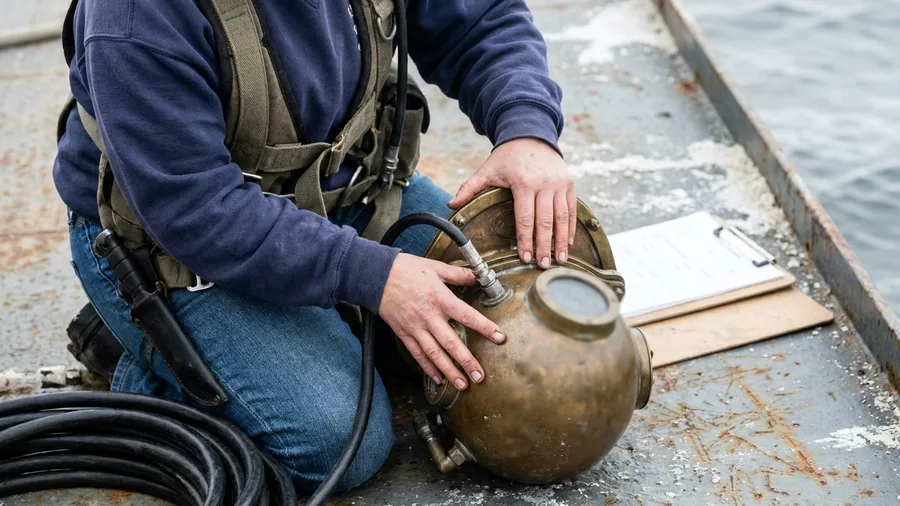
It is easy to see the $300,000 saturation number and start looking up dive schools the same night. The correction is smaller than it sounds, and it is not a reason to give up on the trade. Dive school runs five to seven months and $15,000 to $30,000, and it is only the first certification. Offshore work needs more before anyone hires you.
Commercial divers and underwater welders earn about $80,000 to $250,000, and saturation offshore work tops $300,000, which clears the $250,000 doctor anchor. The range is the point. That top figure is an endpoint for experienced saturation divers after years offshore, not a graduate's first offer. The mistake is reading the ceiling as the starting salary.
Fix the order before you pay tuition. Call the offshore contractors and the union hall, confirm that a paid path exists from dive school into certified work, and only then spend the money. Cold water, pressure, welding arcs, and constant travel are the dirty reality. A niche, cyclical shortage does not remove any of it.
Three Mistakes That Cost Trade Entry Money
7. Offshore roustabouts earn well but boom-bust

Call the offshore operator's training coordinator before you pay for a single certification, and ask two questions: what does an entry roustabout actually take home in year one, and what did the last crew cut look like. The work is out there and it is real. Entry roustabouts run $60,000 to $120,000, no degree required, and the broader offshore ladder is cheaper to climb than saturation diving school.
The catch is what the money is attached to. The $180,000 to $250,000 figure is a toolpusher's pay, a crew leadership role you reach after years on deck. You can clear the $250,000 doctor anchor on a rig only at the very top of that range, and it is not where anyone starts. Before drilling, ask about their pay scale by position and how many people moved from roustabout to toolpusher in the last three years. If nobody answers, that is your answer.
The entry gates are not optional. Offshore survival and safety training, plus a physical standard you have to pass, come before the first hitch. Mud, heat, cramped quarters, weather, and a 14-days-on, 14-days-off rotation structure the entire life, not just the workday.
The honest part nobody puts in the ad: rig work follows oil prices. Layoffs move in cycles with the commodity, and a toolpusher's salary does not insulate you from the next downturn. The upside is real when prices are high. Stability is the cost. Here is where the trade crosses into your own numbers: take the $60,000 to $120,000 first-year range and check whether you can earn from home on a two-week-off schedule in your market, then ask a CPA how to handle the variable-year income before you accept a big check as a permanent baseline.
What These Trades Actually Pay
8. Underground miners get paid for darkness

A miner's paycheck is not doctor money. The common belief says otherwise: go underground for a few years and walk out with $200,000 or more. The real range is $60,000 to $110,000, and overtime in a busy year pushes you toward the top of it.
Offshore rotations showed you the bust can arrive from the sea; underground, the same cycle is sitting in the rock in front of you, and the ceiling is closer. Training takes six to twelve months, shorter than a full apprenticeship, but still a gate you cannot skip. Then comes the work itself: dust in your throat, diesel fumes in a low tunnel, and the site so far out that the drive eats the evening the mine did not already take.
So why consider it? Because a steady $60,000 to $110,000 with overtime in a strong year beats the paychecks that brought you here, and the shortage is real enough to get you hired. What caps it is the trade itself: automation is shrinking the job, and no owner route or offshore premium sits on top. Solid income, yes. Never one the headline $250,000 figure will reach.
Public Health, Death Care and Heavy Industry

The last four trades split into two groups: stable public or institutional payroll, and unusual service businesses where the owner is the only one making real money.
The gap between the employee column and the owner column is widest in death care and biohazard work, because the emotional exposure is what nobody wants to price.
9. Biohazard cleaners profit from other people's disasters

Between $40,000 and $80,000 a year. That is the working range for a biohazard cleaning tech, and it is far below the $250,000 primary-care number. So if the crime-scene shows have you picturing a quiet six-figure career, start by letting that go.
The owner side can reach $100,000 to $250,000, but the top of that range is a contract business, not a cleaning wage. The $250,000 figure is rare even there, and often not reached at all.
You do not have to buy a van or build a client list to start. Certification can take as little as a few weeks. The real barrier is the equipment.
PPE, insurance, and the trust of families in a bad month all cost money and time; they are the price of the first contract. Those costs come before the owner money and are usually what decide if it arrives.
The work itself is the part the headline skips. Blood, decomposition, and odor are the small pieces. A death call means you spend the afternoon in someone else's worst day, often just hours after they heard. Nobody pays for that part separately; it rides along with the wage.
So if you are looking at this today, scale it back. Get certified, work two years for an established company, learn how the insurance side works, keep a steady paycheck while you decide whether you want the rest. Or take one job a month and let someone else carry the contracts and the liability.
The demand exists, and it pays more than the work you started the day with. It just does not pay like a doctor. That is still a living and a skill worth having, and you do not have to bet the next five years on it to find out.
Your First Week of Trade Research
10. Embalmers earn modest pay until they own the home

The first thing most people picture is the funeral home on the corner, slow and quiet, and they assume the money behind it never moves. That picture is half right. It is quiet, and depending on your role in it, the money may not move as far as you would hope.
An embalmer or funeral director working for someone else earns roughly $50,000 to $90,000. An owner of the home can reach $120,000 to $250,000, though that top figure is owner pay, earned on the business side, and not a wage you collect as staff. So the stability sits in employment, and the six-figure ceiling sits in ownership, and the two almost never overlap.
Getting into it takes two to four years of mortuary school, then the credentialing your employer and your state require before you can work on your own. This is the move to check first: call your state's funeral licensing board and confirm the requirements before you enroll anywhere or pay a tuition bill, because the rules vary by state and you do not want to spend money on a program your state will not accept.
The work itself is blood, chemicals, decomposition, and grief, and the on-call death calls that come at 2 a.m. land on your schedule whether you slept or not. The demand for it is genuinely steady, since none of us get out alive, but that steadiness pays a modest wage until you are running the place.
If you are drawn to it, start small. Even working a few hours a week as a funeral home assistant, or taking a single intro course, tells you whether you can handle a prep room before you commit years and tuition. You are not doing this to prove anything. You are doing it to find out, at low cost, whether this is the life you want.
11. Wastewater operators trade smell for stability
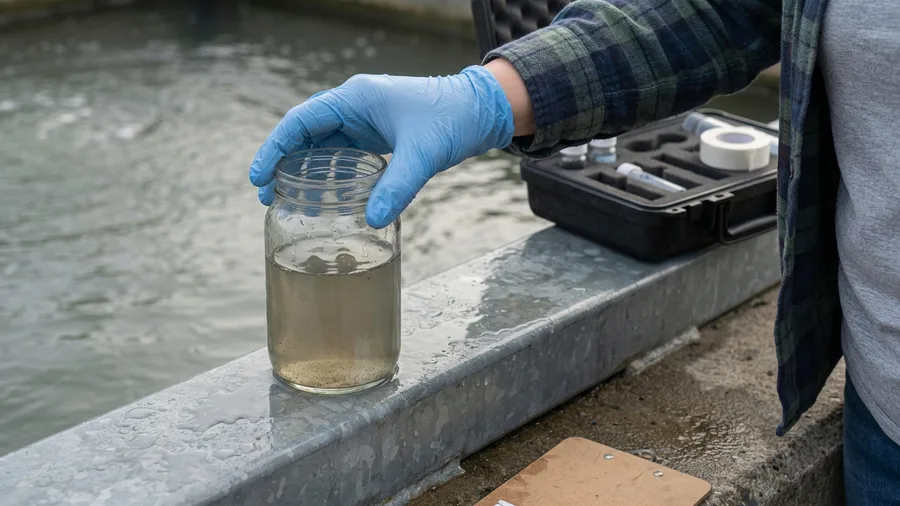
Wastewater treatment pays $50,000 to $85,000 plus public benefits and a pension, and you can often start with on-the-job training. The sooner you apply, the sooner that pension clock starts, and that clock is the whole return.
Be straight about the ceiling: the $250,000 doctor number sits outside the operator range, and the top of the ladder here is management, not a windfall. What you trade for it is sludge, confined spaces, odors, and night shifts, and the payroll pays for that exposure, not around it. Check your state's certification rules before you pay for any course, because those rules vary and a public employer will often train you while a private course bills you first.
A pension and steady benefits compound the way a snowball does, one year at a time, so the person who starts this month and the person who starts next year end up in different places. Call the local treatment plant and ask what their trainee intake looks like. That call costs nothing and starts the clock.
⚠️ COMMON MISTAKE
Do not mistake an ad for a pay scale
A job listing quoting $95,000 usually means a licensed journeyman with overtime, not a trainee. Ask what the helper earns in year one – that number, not the ad, is your real starting wage.
12. Boilermakers top $150k, short of doctor pay

The belief is that a boilermaker clears doctor money with overtime. The trade is real and the shortage is real, but the pay ceiling is not doctor pay. A boilermaker earns roughly $60,000 to $110,000, and the top of the range with overtime lands near $150,000.
That is $100,000 short of the $250,000 primary-care anchor, and there is no owner or offshore tail in the facts that closes the gap. It is solid skilled-trade money. It is not the number the headline promised.
I spent a stretch of a previous job welding and fitting inside a boiler during a turnaround, and the part that stuck with me was not the heat. It was the twenty minutes of crawling through a manway to reach a space where you could not stand up straight. You did not notice it on the way in. You noticed it at hour eleven of a twelve-hour shift.
The entry is a four-year apprenticeship, often through a union, and that apprenticeship is the gate. There is no certificate shortcut that gets you onto the top of a boiler or into a confined space legally. The credential is the path, not an obstacle in front of it.
The dirty reality is confined spaces, heat, heavy steel, and travel. The travel is the piece people underestimate. Turnaround work takes you to refineries and plants far from home for weeks at a time, and the top of the range is driven by exactly that travel and overtime, which means the number at the top comes with a schedule that is not yours.
I went in thinking the overtime was the prize. It is, but it costs you holidays and the ability to plan anything on a weekend, and once I understood that, the $150,000 stopped looking like a windfall and started looking like a wage with a schedule attached.
If the prospect of a union apprenticeship and a genuinely stable trade still appeals after hearing the honest ceiling, call the local boilermakers' union hall and ask about apprenticeship intake. Ask what the current journeyman rate is in your area, and ask how much travel the turnaround work requires. Those three answers tell you more than any headline.
Frequently Asked Questions
How much should I save before starting a trade apprenticeship?
Enough to cover tools and transportation for the first few months, which for most apprenticeships means $1,500 to $4,000. Apprenticeships pay you while you train, so the pressure is much lower than with a four-year degree. Pass the ideal window and gather what you can; the first paycheck covers the rest.
Should I pay for trade school or wait for an apprenticeship?
Call the apprenticeship office first. A paid apprenticeship gives you the same credential without tuition and puts money in your pocket from week one. School makes sense when the waitlist is long or you need the credential in a hurry, and it should never be the default.
Is it too late to move into the trades at 40?
No. Apprenticeships vary in their upper age limits but many trades take adult entrants, and owners actively hire reliable people. The body does age faster than the paycheck, so be honest about how many years of heavy work you have in you before you choose.
Why do owners make so much more than employees in these trades?
Because ownership carries the truck, insurance, licensing, equipment and the stretches with no work. The high range is a business income with business risk attached. Compare it to a journeyman paycheck before you decide to build one.
Do these trades really have a worker shortage?
Yes, especially in plumbing, HVAC, line work and elevator service, and shortage raises demand for workers. It does not remove apprenticeship requirements, licensing or safety rules, and it does not make anyone's first year a six-figure one. Shortage means the work is there; you still have to qualify for it.
Which trade should I pick if I want the least physical damage?
Elevator mechanics and wastewater operators tend to wear people down more slowly than sewer work or lineman calls, though no trade here is easy on the body. Ask a working tech how many years most people last, and take that answer more seriously than the salary figure.
Sort the Twelve by What You Can Start
most of these twelve are solid skilled trades, not doctor salaries. The $250,000 shows up at the top of an owner column, in saturation offshore diving, or at toolpusher level. The employee ranges, the ones you would actually start in, sit far lower.
So decide by situation. Fastest paid entry: HVAC helper, sewer tech, wastewater trainee. Highest realistic ceiling: commercial diver, plumber or HVAC owner, storm lineman. Best stability: elevator mechanic, wastewater operator. Pick two, call the local union or apprenticeship office and the state licensing board, and do not pay private tuition until an employer confirms they are hiring and a paid training slot exists.
Then compare first-year take-home after tools, tuition, insurance, on-call, and what the work does to your body. The best dirty job pays while you train and has a ceiling you can actually reach. Back to that Thursday ping: the intake date and the deposit are the real question, not the $250,000 headline.
Make the two calls this week
Call the local apprenticeship office and ask the next intake date, then ask the state licensing board what certification the trade requires. Two calls, two trades, before you pay anyone a dollar.