
I once paid a $240 bill for a visit that was fully covered, because the front desk booked it as a physical and I never asked for the annual wellness visit by name. Nobody warns you that the words matter more than the coverage.
That is the belief most people walk in with: Medicare covers what it covers, and the bill that arrives is simply what things cost. So the wellness visit gets skipped because it sounds like a physical that will be charged, the screening gets paid without argument, and the premium comes out of a Social Security check every month without anyone asking why.
None of this is a loophole or a new product. The money already sits in services and programs Medicare funds. What releases it is the exact name of the service, the date it gets booked, and the way the claim is coded – three conditions, and the conditions are what people miss, not the benefits.
By the end you should be able to spot the two or three items here that fit your situation, know the first official step for each, and have three documents in hand before you make a single call. You do not have to work through all eight this month.
Claim one that has a deadline first, and let the rest wait for the calendar.
Quick Tips Before You Start
Write the exact service name
Book the annual wellness visit or the Welcome to Medicare visit by its official name, never as a physical or a checkup.
Build one medication list
Every drug, dose, and how often, on one page. It drives eligibility screening, plan comparison, and the visit itself.
Ask how it will be coded
At check-in, confirm whether anything you raise will be billed as preventive or diagnostic.
Use only official desks
Social Security, the state Medicaid office, and SHIP take applications. No agent can enroll you in a Medicare Savings Program.
Check the date on your Part B card
The Welcome visit window is measured from that date and does not reopen. Verify the current rule on Medicare.gov.
Keep the paper trail
Premium notices, bills, denial letters, and explanation-of-benefits statements are the basis of any appeal or screening.
1. The annual wellness visit is a free planning session

I keep a single page in the front of a folder, and the top line reads: annual wellness visit, booked for March, asked for by name. That page started because a woman at my church told me her checkup was a physical and the physical came back as a bill.
Part B pays for one prevention-planning appointment a year at zero cost, as long as the practice takes Medicare assignment (meaning it agrees to Medicare's rate and can't bill you the difference). The booking is the whole trick. Say annual wellness visit and nothing else. Say physical, checkup, or full work-up and you have asked for a different service with a different price.
What actually happens in the room is narrower than people expect: a look at family history, risk factors, memory and fall-risk questions, and a written plan for the next twelve months. No head-to-toe exam. Confirm the current covered elements and any cost-sharing on Medicare.gov before you go, because the contents shift and most people assume the visit is bigger than it is.
So here is the review to do before the appointment, and it takes twenty minutes. Write out every medication with its dose. List every doctor and specialist you see. Add family history with conditions and the age each was diagnosed. The visit is only worth what you feed it, and a plan built on a vague history is a page you will never use.
Afterward, look at two things. First, how any problem you raised got coded – a new symptom or an unmanaged condition can land as a separate diagnostic visit with its own bill, so ask at check-in how it will be handled and whether it needs its own slot. Second, whether you walked out with the written prevention plan. That paper is the point. Carry it to every other provider instead of a bill.
💡 Tip: Call the office the day before and repeat the words "annual wellness visit" to whoever answers. Confirmations get re-keyed more often than you would think.
| Perk | What it can lower | Who should check | First official step |
|---|---|---|---|
| Annual wellness visit | Cost of a yearly prevention-planning visit | Anyone on Part B who has not had one this year | Book it by that exact name with a provider accepting assignment |
| Welcome to Medicare visit | Cost of a one-time prevention review | New enrollees inside the Part B window | Confirm the timing rule on Medicare.gov, then book |
| Preventive screenings | Cost-sharing on mammograms, colorectal screening, shots | Anyone due under the covered age and interval rules | Ask the scheduler to code it as preventive and confirm assignment |
| Extra Help (Low-Income Subsidy) | Part D premiums, deductibles, copays | Limited income and resources | Apply through Social Security at ssa.gov or a local office |
| Medicare Savings Programs | Part B premium, sometimes copays and deductibles | Limited income, and state-specific limits | Apply at the state Medicaid office |
| Medigap open enrollment | Future copays and health-question risk | Turning 65 or newly on Part B | Check the window on Medicare.gov before any insurer |
| Medicare Advantage extras | Dental, vision, hearing, fitness costs | Anyone comparing plans with current doctors in view | Call each doctor's office to confirm network status |
| SHIP counseling | Nothing directly, but it finds the rest | Anyone confused by any of the above | Find the local program through the SHIP locator on Medicare.gov |
2. The Welcome to Medicare visit has a hard deadline

Book the Welcome to Medicare preventive visit inside the first twelve months your Part B is active, because that window is the one thing on this whole list that shuts for good.
It is a one-time appointment, distinct from the yearly wellness visit that comes after it, and the two get confused at the front desk all the time – ask for the Welcome visit and you get it, ask for the wellness visit in your first year and the clock keeps running in the background. The exact timing rule is on Medicare.gov; check it there before you dial, since once it passes the visit cannot be deferred, appealed, or recovered.
In the room you get a history review, blood pressure and weight, a basic vision check, depression and other risk screenings, and a written plan that points you into the shots and tests you are due for – not treatment of an existing condition, not a full physical, not lab work beyond the listed pieces. Already past the window? Let it go and book the yearly wellness visit instead, which has no deadline attached.
💡 Tip: Check the Part B effective date on your card the day the card arrives, not the day you next see a doctor.
💡 PRO TIP
The two-word habit that pays for itself
Say "preventive" out loud when the appointment is booked and "assignment" when the provider is chosen. Those two words decide more Medicare bills than any plan comparison.
3. Set screenings to preventive and confirm assignment

The fear is that the free test was free only until the bill showed up, and that fear is well earned – it is the follow-up visit, not the screening, that usually costs you.
A long list of tests and shots runs at zero cost-sharing under Part B, mammograms and colorectal screening and vaccines among them, as long as the service qualifies as screening and you are inside the covered interval. Get the current list and those intervals from Medicare.gov, because frequency rules differ test to test and a test done early owes the usual costs.
The trap has a shape. A screening colonoscopy that removes a polyp can be coded diagnostic, and suddenly anesthesia and pathology arrive as bills. A mammogram called back for another view stops being screening. The first test was free; the second was not.
So build the ask into the booking itself, before you walk in. Tell the scheduler you want the service coded as preventive, and get a yes on the record. Then confirm the provider and the facility both accept Medicare assignment, since a non-assigned one can bill the difference. Two questions, one phone call.
Three conditions hold the zero in place: the word screening, the covered interval, and assignment. Check all three when the appointment is made, not when the envelope is open. And if a test was ordered because of a symptom rather than as routine screening, treat it as diagnostic from the start and expect the usual costs – that is the system working as designed, not a mistake to fight.
💡 Tip: Ask the scheduler to note "preventive" in the appointment record while you are still on the phone, so it is there before you arrive.
4. Apply for Extra Help through Social Security

File the Extra Help application at ssa.gov before you refill another prescription at full price. Social Security runs this program, officially the Low-Income Subsidy, and approves or denies it on paper – your income and your resources, counted by their rules, not a plan brochure's. That is the same shape as a free screening: somebody with authority looks at your documents and says yes or no. Nothing an agent tells you on a call decides it.
Have three things ready before you start: your Social Security number, proof of what comes in each month – a pension statement or an award letter works – and your bank balances. Add your current drug plan card. A full medication list with doses is the document that matters most, because it is what the plan finder needs after approval.
⚠️ COMMON MISTAKE
The premium comes out anyway
Relief starts on the approval date, not the application date. While people wait to apply, the Part B premium keeps coming out of every Social Security check, and that money is not returned for the waiting. File the state Medicaid application now and sort the paperwork afterward.
5. Medicare Savings Programs pay the Part B premium
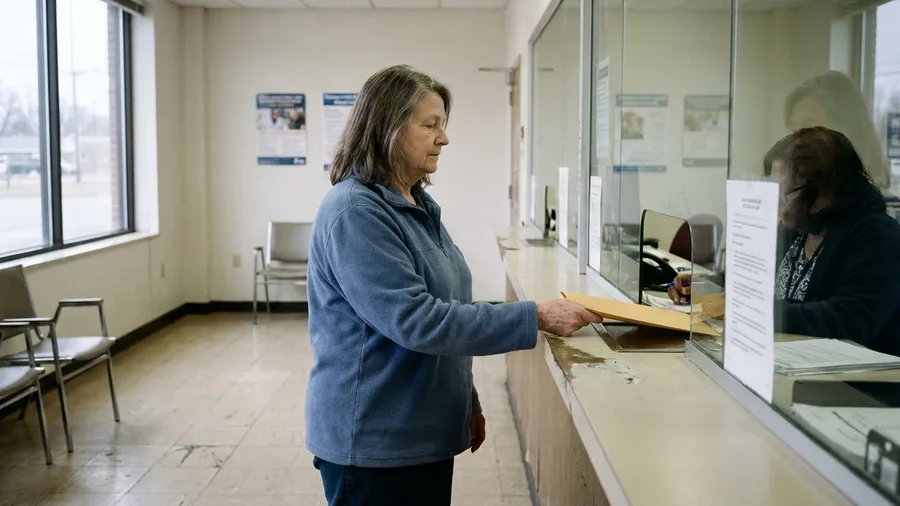
The pitch that a private agent can get your Part B premium paid is a plan sale, not a benefits program; the real route is the state Medicaid office. State-run Medicare Savings Programs can cover the Part B premium and, in some cases, copays and deductibles for people with limited income. The main types are QMB, SLMB, and QI, and what each pays differs by program and by state.
Extra Help handles the pharmacy counter; these programs handle the premium itself, and the same money question decides both. File them together rather than one after the other, because qualifying for an MSP can also qualify you for Extra Help, and QMB status in particular changes drug cost-sharing.
Get the current income and resource limits from the state Medicaid office or Medicare.gov before you apply. Two reasons: the limits and even the program names shift, and a figure quoted secondhand is worth nothing when the approval is decided on paper. A number a neighbor was approved under two years ago may not be the number today.
Here is why the timing matters more than the paperwork.
The Part B premium comes out of the Social Security check every month, and it keeps coming out until the state approves the application. Relief starts on the approval date, not on the date you mailed anything, so every week between deciding and filing is a premium you paid that a program would have covered.
For a Medicare Part B premium that runs above $170 a month, a slow application is real money gone from a fixed check.
That makes this the item to start first, not the one to get to after the other calls. Apply early, file the Extra Help request alongside it, and let the approval date do the work.
💡 Tip: Ask the Medicaid office to date-stamp your application and note the approval date somewhere visible. That date is the start of the savings.
Before you switch: what the premium actually buys
Original Medicare + Medigap + Part D
- Higher monthly premium, predictable copays on the other side
- Any provider who accepts Medicare, no network to check
- No prior authorization for most covered care
- The open enrollment window is the one time health questions cannot be asked
Medicare Advantage with extras
- Lower or zero premium, cost-sharing attached to each visit
- Dental, vision, hearing, and fitness allowances set per plan
- Network restrictions and prior authorization rules apply
- Yearly maximum on extras can be spent by mid-year
6. The Medigap open enrollment window skips health questions

You are not stuck with a Medigap policy that no longer fits, but the easy door is open only once. If you are 65 or older and enrolled in Part B, a one-time Medigap open enrollment window runs from that enrollment – confirm its exact length on Medicare.gov, because this is a date you cannot get back. Inside the window, no insurer may ask about your health or turn you down for a condition.
Outside it, most states let insurers medically underwrite a new policy, which means a diagnosis that arrived since can block the switch or price it out of reach. The trade-off is real: a higher premium buys predictable copays and any provider who accepts Medicare. Weigh it against the lower premium with cost-sharing attached to every visit – the deadline is what makes this decision worth sitting with now.
💡 Tip: Write the window's end date on the same calendar as your birthday. The deadline is set against your health record, not the calendar year.
7. Is dental and vision really free in Medicare Advantage?

Dental, vision, and hearing coverage under Medicare Advantage is not free money sitting in the plan. It is an allowance the plan prices into its own budget and pays out on its own terms, and the terms are different in every county, every plan, and most years, every January.
The extras do exist, and they do real work. A vision benefit might mean $150 toward frames every two years. A dental allowance might be $1,000 a year for cleanings and a crown. A hearing allowance might cover part of a device, not the device itself, which is the line people hear after the fitting. Each plan also sets its own network, so the periodontist already handling gum work may simply not be on the list, and prior authorization can sit in front of a procedure your old coverage approved without a phone call.
So the extras are not the question. The question is what the plan costs across a whole year. Add the monthly premium, the copay on every visit the reader actually expects to make, the Part D drug bill, and the leftover on the dental or hearing bill. Set that number beside Original Medicare, a Medigap premium, and a Part D plan, and compare the two totals side by side. The plan with the $0 monthly premium and the free fitness membership loses that comparison more often than the ad copy suggests.
The switch itself carries a risk that shows up after the fact. Before anyone leaves a current plan, call the doctor's office and the hospital directly and ask if they will be in that plan's network next year. Directories go stale. Front desks know.
The lesson is the reframe: nothing here is thrown in. The free extra was priced somewhere, and the only move that saves money is finding that line before the switch, not reading about it afterward in a denied claim.
8. One call to SHIP can untangle the whole list

Zero. That is the hourly rate for a SHIP counselor, and it is the only thing on the list a reader can get without a deadline, a billing code, or a form to file.
State Health Insurance Assistance Program counseling is paid for by the government, not by the plans it reviews. The person on the other end is not an agent, carries no commission slip, and earns nothing whatever the reader decides. What they need is the paperwork: the Medicare card, a full drug list with doses and how often each is taken, the premium notices and bills, and any denial or explanation-of-benefits letters that arrived and got set aside. That stack is the entire basis of the advice, so the person who assembles it for twenty minutes gets advice about their actual life instead of a generic brochure.
Finding the local office takes one lookup on Medicare.gov or a call to the state aging agency. Appointments run by phone or in person, at no charge, and no selling happens at the end. This is the part most people never try, because money help normally comes with a pitch attached.
The boundaries are worth knowing up front. A SHIP counselor explains the choices, compares plans, screens for Extra Help and Medicare Savings Programs, and helps file a claim or an appeal. The counselor will not enroll anyone in a plan and cannot make the decision. The decision stays with the reader, who now has a free second opinion on it.
Start with one appointment, not a whole project. One sitting, one stack of paper, and most of the confusion about premiums, drug tiers, and network changes gets sorted in that hour.
💡 Tip: Bring copies, not originals, and leave the folder with the SHIP counselor. Reconstructing one missing letter costs more than the call saved.
Frequently Asked Questions
Is the annual wellness visit the same as a physical?
No, and the difference is the whole point. The wellness visit is a prevention plan and risk review with a written plan for the year ahead. A physical is a different service with different billing. If you want the free version, book it by the exact name and confirm the provider accepts Medicare assignment.
I am past my Welcome to Medicare window. Can I still get it?
The one-time Welcome visit is tied to a window measured from your Part B start date, and it does not reopen once it closes. What you can still do is book the annual wellness visit, which has no such deadline and can be repeated each year. Put the energy there.
Why was my free screening billed to me?
The most common cause is that the service was coded diagnostic instead of preventive, or that it fell outside the covered screening interval. A screening that turns into a polyp removal or a call-back image can cross that line. Ask the provider for the billing code, ask the scheduler to note preventive, and confirm assignment before the appointment.
Can an insurance agent enroll me in a Medicare Savings Program?
No. Medicare Savings Programs are administered through the state Medicaid office, and no agent or insurer can enroll you. If someone offers to do it for you while pitching a plan, that is a plan sale, not a benefits application. File at the state office and keep the date-stamped copy.
How do I know if I qualify for Extra Help?
Eligibility turns on income and resources as Social Security determines them, so the current limits come from SSA, not from a plan brochure. The application runs through ssa.gov or a local SSA office, and the documents that decide it are your income records, resource statements, and a complete medication list. If your situation is complicated, Social Security or SHIP can walk the numbers with you.
Should I switch to Medicare Advantage for the dental and vision extras?
Only after comparing total yearly cost, not the premium. Add up premiums, copays for care you actually expect, drug costs, and whatever the extras leave uncovered, then set that against Original Medicare plus Medigap plus Part D. Before you decide, call your doctors and hospital and confirm they will be in the plan's network next year.
Your first move depends on which problem you have
Your first move depends on which problem you have right now. New to Medicare? Confirm your Welcome to Medicare window on Medicare.gov this week and book that visit and the annual wellness visit by name. Premium strain? Call your state Medicaid office and ask for a Medicare Savings Program screening – QMB, SLMB, or QI. Drug-cost strain? File the Extra Help application at ssa.gov before the next refill. Plan-shopping? Book a SHIP appointment before you compare another plan.
All four routes run through 1-800-MEDICARE (1-800-633-4227) or Medicare.gov, and all four go better with the same paperwork in front of you: your Medicare card, a complete drug list with doses, and recent premium notices or denial letters. Gather those three before you dial. Whichever one is missing tells you where to start.
The bill that arrived was never the final answer. The service was funded the whole time, and the only missing pieces were the words, the date, and the code. Start with whichever one has a deadline attached – the Welcome to Medicare window or the Medigap open enrollment – and put the rest of the list on the calendar behind it. One phone call, one document, this week.
Do one of them this week
Pull your Medicare card, write out the full medication list with doses, and check the Part B start date. Then start with the entry that matches your situation and cancel nothing before you have the approval letter.