
Somebody else's side hustle is $5,200 in cash that nobody ever asks about. Yours is a shoebox of paper and a camera roll of screenshots you are afraid to open.
No form arrived at the end of any lawn job, so the whole $9,000 feels invisible. It isn't. The $2,800 that moved through a payment app and the $1,000 booked through the online platform already generate forms to you and to the IRS. Cash is quieter because nobody files a form on it, not because it leaves no trace.
So test every dollar the same way: filed automatically, traceable through deposits and customer books, or resting entirely on your own records.
By the end you can decide what to report on the $9,000, what to do about the $1,400 of cleared-out tools and furniture, and whether to amend, set aside, or hand the year to a preparer. You are not guessing at a threshold that lives on IRS.gov, and the tax here is usually smaller than the fear of it.
Quick Tips Before You Start
Pull your forms first
Download every 1099 from each app and platform before you open a tax form, so your numbers are never guesses.
One account for side work
Every job payment in, every gas and dump fee out, so a $5,200 cash total stops blending into groceries.
Log it the same day
Date, customer, amount, and how you got paid, written when the job is done rather than reconstructed in April.
Keep the small receipts
Gas, blade sharpening and dump fees add up to roughly $1,100 here, and only documented costs count.
Check IRS.gov for thresholds
The reporting threshold changes, so read the current figure on IRS.gov instead of trusting a number from a forum.
The paper trail you don't control

Start with the dollars you cannot keep out of the system, because those are already decided. Every payment type here gets tested the same way: what document exists, who already holds it, and what your own records can still prove.
Get this first group straight and the rest of the year stops being a mystery.
1. Payment apps file a form on you

You might assume the app only tells you. In reality, that $2,800 running through your payment app and the $1,000 booked on the service platform are already known to the IRS before you even think about filing.
The forms don't wait for you to label anything. They fire off automatically as soon as the payment moves through a business profile, even if the money was for a personal favor, so the system sees it regardless of what you call it.
The reporting threshold is set by the IRS and can change, so check the current figure at IRS.gov rather than trusting a number you heard. Giving a friend $40 through your phone is a separate matter from a $40 mowing job, so keep a business-only profile or a second account and use clear payer names and memos.
💡 Tip: Name every app profile for the business, and put the customer's name and the job in the memo of every payment.
| How the money arrived | What is filed with the IRS | What the IRS can still see | What you owe on it |
|---|---|---|---|
| $2,800 through a payment app | A form from the app, to you and the IRS | The total paid through that profile | Income tax plus self-employment tax on the net |
| $1,000 booked on a service platform | A platform form for gross payments | Every job booked and paid through the site | Same, on the net after costs |
| $5,200 in cash from households | Nothing, no payer form | Deposit patterns, your ads, customer books | Same, and the thinnest trail if a log is missing |
| $1,400 of used tools and furniture | A platform form may still issue | Gross sales on that marketplace | Usually nothing, if these were personal items |
2. Business clients put your name on paper

Get a W-9 in front of any business customer before the first invoice. A business customer needs your taxpayer ID, an SSN or an EIN, and that number is how the payment gets attached to your name in the system. It is not a form you fill out later when things get serious; it is the paper that decides whether a 1099-NEC lands with your name spelled right or not at all.
An app or platform files on you automatically. A business customer is the next filer, and it works without any platform in the middle, which is the part people miss. The IRS 1099-NEC instructions define who counts as a business paying a contractor; a household paying for lawn care or handyman work issues nothing. In the $9,000 example the customer list is all households, so no 1099-NEC arrives from anyone. That doesn't make the year quiet. The $1,000 platform booking and the $2,800 of app payments still leave forms, and the $5,200 in cash is the only slice with no payer form at all.
The common mistake is assuming the absence of a form means absence of a record. Households don't send paperwork, true, but a business customer deducts the invoice and writes your name, the amount and the date into their own books.
So a 1099-NEC can still show up in February, after you filed in January. The fix is an amended return and the payment that goes with it, not a catastrophe. It only becomes one if you open the envelope and put it back in the drawer.
3. Cash leaves no form but leaves traces

Unlike a formal 1099-NEC, no one files a form when a customer peels off bills for lawn care, but the money still shifts from their hand to yours and often into your bank account.
Three things can expose it. A steady run of deposits roughly the size of a single job into your personal account draws notice. The online ad or app that connected you to the customer leaves its own trail. And if a business customer deducts the handyman invoice, their own books now carry your name, the amount and the date.
In this example the households aren't writing anything off. But the $5,200 in cash is the thinnest record you have, and the one most likely to be pulled into view the moment an app form, a resale form or a deposit review points toward the year. Keep a same-day log and a separate account so you can prove it.
💡 Tip: Deposit cash weekly in the same amount pattern you actually earned. Round-number lump deposits are what look odd, not regular ones.
What it costs when the numbers don't match

The money that stays quiet is the money with no form behind it, and that quiet ends the moment the numbers stop agreeing.
A return that reports $6,000 of side income while the app has already filed a form for $2,800 and the platform for $1,000 is not a rounding difference. It is a gap, and a gap is what gets worked. The usual outcome is unglamorous: the missing income gets added back, income tax and self-employment tax are calculated on the corrected total, and a penalty and interest land on top. Interest runs from the original due date, not from the day anyone notices. On a few thousand dollars of unreported side income the extra charges often tally in the low hundreds rather than the thousands people fear, but they are real money and they buy nothing.
What the reader pays twice is the time. A corrected return is new paperwork done to the standard of the worst records in the file, and this file is a shoebox and a camera roll. Reconstructing what a dump run or a blade sharpening cost, months after the fact, takes an evening you never get back.
The calculation changes when it is voluntary. Fixing a mismatch before anyone writes to you is an amended return and a payment; the same fix after a letter carries whatever the letter already added. That is not a scare tactic, it is the difference between two prices for one mistake.
4. Selling online splits into two cases

The worry that arrives with a Marketplace notification is usually the same one: a form just showed up, so this must be a tax bill now.
It isn't, in either of the two situations a sale can fall into. Selling things you already owned and used, at a loss or a small gain, is not a business, and a platform form reports gross payment flow, not profit. Buying stock specifically to resell it is a different activity with different records. The line between the two is drawn on the IRS page on online sales, and that page is where to settle it rather than in a memory of what someone said.
Take the clear-out. Tools and furniture that came out of the garage brought in $1,400 across two platforms. That belongs on the return as a sentence of explanation, not a business schedule, and a platform form arriving does not change that. The reason to sort it out this month rather than next spring is the calendar: the platform has already reported that $1,400 somewhere, and a return that explains it costs a line and a moment. A return that ignores it costs a letter, a response window, and the afternoon it takes to answer.
If the reselling turns regular, buying stock, tracking inventory, repeat sales, the whole thing moves onto a business schedule and the recordkeeping changes with it. Every month on the personal side is a month you don't have to reconstruct inventory you never tracked.
What it costs when the numbers don't match
5. Computers match every form to your return

The fear here is usually that a person somewhere is reading your bank statements line by line. That is not what happens.
What happens is a computer. The IRS already holds the forms your app and the booking platform filed, each one carrying your name, the payer, the amount and the tax year. When your return comes in, those forms get matched against the income you reported. No examiner, no judgement, just a comparison that flags a number filed with the agency and missing from your return.
That is why $2,800 through the app and $1,000 through the platform are the exposed pair. Report them lower, or leave them out, and the mismatch is mechanical. The cash is quieter only because no form sits on the other side of the comparison.
The structure that takes the surprise out of it is simple enough to copy. Keep one sheet, written or a spreadsheet, with a row for every form you expect: payer name, form type, amount, tax year. The app total, the platform total, anything a business customer sends. Each time a form lands, check it against your row, and at filing time your return gets built from the sheet rather than from memory.
If a notice does come, read the face of it before anything else. Small honest mistakes are often what trigger a closer look, so it pays to know the audit red flags before you respond. It names the payer, the form, the amount and the year, proposes a change, and prints a response window with a date. That date is a deadline, not a suggestion.
The ordinary fix is an amended return that reports the income and pays the difference. Ignoring the letter moves it toward collection and more penalty, which is a worse version of the same bill.
The sheet costs one evening to set up. It is the cheapest insurance in this whole exercise, because it turns a letter into a clerical check instead of a bad week.
Self-Employment Tax — Where the Second Bill Comes From
💵 Side income
About $9,000
🧾 Documented costs
About $1,100
📊 Net side profit
About $7,900
🏦 What it funds
Social Security and Medicare
📉 Softener
Half the SE tax is deductible
🗓️ What was prepaid
Nothing from the day job
The surprise
The day job's withholding was calculated without the side income, so April carries the entire side tax bill at once.
6. Self-employment tax is the forgotten half

Start by moving $25 of every mowing payment into a separate savings account the same week it clears.
The reason a small set-aside is enough to begin with is that side income gets hit twice: once by income tax, and again by self-employment tax, which is the Social Security and Medicare contribution that normally comes out of a paycheck. The day job's withholding was figured on the day job's salary alone, so none of it prepaid this. On the $9,000 lawn and handyman year, take out the roughly $1,100 for gas, blade sharpening and dump fees and you land near $7,900 net, and that figure lands in April feeling far bigger than the June payments that built it because nothing was parked along the way. Half of the self-employment tax comes back as a deduction against income, which trims the total without erasing the charge. The rate and the income floor sit in the Schedule SE instructions on IRS.gov.
$25 on a $150 job is under a fifth of it, and the point is the habit rather than the amount.
⚠️ COMMON MISTAKE
Waiting for the letter is the expensive version
Ignoring an unreported form does not make the year go away. Interest runs from the original due date, not from the day anyone notices, so every month of silence adds to the bill.
7. Penalties and interest grow while you wait
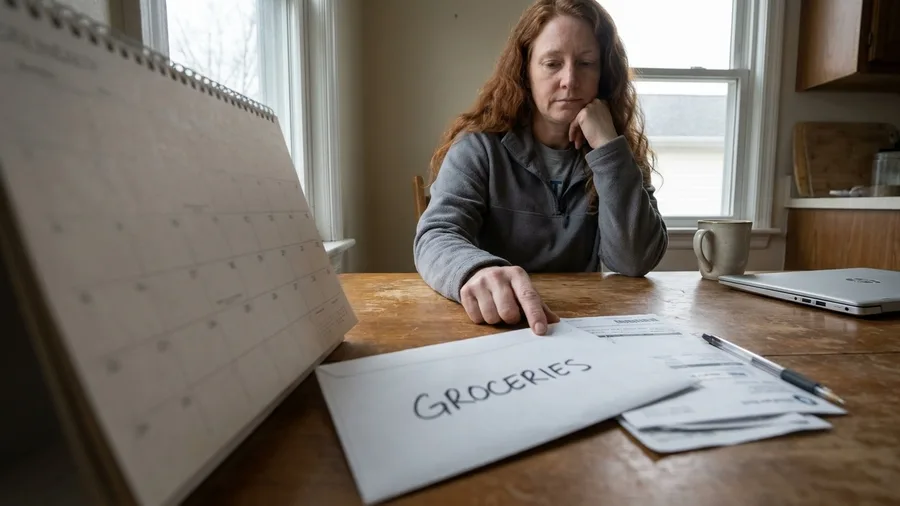
I have watched a client open the same envelope four times before calling anyone, and the number inside had not grown because she waited to look.
An unpaid balance left alone picks up three costs at once. There is the tax that went unpaid, there is a failure-to-pay penalty that attaches to money not sent by the due date, and there is interest that starts running from the original due date whether or not anyone has written to you yet. A separate failure-to-file penalty applies when the return itself is missing or late. Because the rates change, they are printed on IRS.gov rather than fixed here.
you do not have to solve the whole balance this month. Work out what you owe, send what you can, and set up a payment arrangement for the rest, because each dollar that stops accruing interest is a dollar no future month has to find.
What changes is not the arithmetic but the posture. A correction you bring forward, an amended return and a payment, gets treated differently from one that arrives after a notice lands in the mailbox, and the voluntary version tends to cost less.
One honest line on when the do-it-yourself version stops being wise. Hire a preparer right away if a notice has already arrived, if more than one year went unfiled, if cash-heavy income came with no records, or if a 1099 shows up with a name you do not recognize.
Fixing It Yourself vs. Handing It to a Preparer
Do it yourself
- One clean year, all forms in hand
- Forms match what you actually earned
- Costs documented with receipts
- You can amend and pay this week
Pay a preparer once
- A notice already arrived in the mail
- More than one unfiled year on the shelf
- Cash-heavy income with no records at all
- A 1099 form you do not recognize
8. The audit window runs years, not months

Two years is not the safe number people assume it is.
The clock that decides how far back the IRS can assess tax is counted in years and starts running from the date the return was filed, not from the end of the side job. That is why an unreported app form from two summers ago is still live today: the window has not closed, and waiting does not shorten it. Where income was substantially understated the window gets longer, and where fraud is involved there is no window at all. The IRS page on the statute of limitations is where the current terms are written.
This is the entry to take to a professional rather than settle in your head. A fee-only fiduciary or a CPA can pull your actual filing dates and income figures and tell you, year by year, what is still open. On the $9,000 with $5,200 of it cash, the difference between an amended return and a wait-and-see posture is worth one paid hour.
What that hour usually produces is not a rescue plan. It is a list of years and amounts, and a decision to amend or file and pay, with the IRS.gov instructions open in front of you.
The alternative is guessing at a number that only applies to your dates.
What to do about it now

Everything above is information. This group is the part you act on this week.
You do not have to fix the whole year in one sitting. Pick the move that matches where you actually stand and start there.
9. Reporting it is cheaper than hiding it

The $9,000 goes on a business schedule attached to your 1040, the net profit from it flows onto the self-employment schedule, and the roughly $1,100 of gas, blade sharpening and dump fees comes off the top – but only the part you can document.
Most of that year's receipts were never kept, and that is a fixable problem rather than a closed door. Rebuild the cost figure from bank statements, app payment histories and a same-day log written out now while the jobs are still fresh in memory, and claim what the records support. Anything you cannot point to is a number you are guessing at, and a guessed deduction is the kind a reviewer removes.
Before you settle the expense question, read the business-versus-hobby distinction on IRS.gov yourself, because that line decides whether the $1,100 counts at all. And if the year is messy – heavy cash, several platforms, thin records, an unfiled return from before, or a letter already in the mailbox – pay a preparer once to walk the business and hobby question with you instead of guessing through it.
💡 Tip: Pull both your bank statements and your app history before you reconstruct costs. Between them you will recover more than the camera roll shows.
10. Set aside now, pay quarterly, avoid the shock

Open a second savings account this week and label it tax, then move a fixed cut of every job payment into it the same day the money lands.
I learned this one the hard way. My first year of side work, the $6,000 I cleared arrived in dribs across ten months and felt like found money each time – gas money, basically – and I spent it that way. Then April came and the number I owed was somewhere near $900 I did not have sitting anywhere, so it went on a card and I paid interest on my own tax bill for four months.
The fix is boring and it works. Pick a percentage, take it from your last tax bill or your own effective rate, and treat that slice as never having been yours – the account is for the IRS, not for a slow week. If your side income lands in the 12% income-tax bracket and self-employment tax adds its share on top, you are setting aside somewhere around a quarter to a third of each payment.
Run the arithmetic plainly so the number stops being abstract. From $9,000 subtract the $1,100 of costs and you have about $7,900 net. Apply your own bracket to that and the Schedule SE figure you look up on IRS.gov, and you have your set-aside – no one can hand you the percentage without your bracket, so look yours up rather than borrowing someone else's.
Then decide how you will pay it. Quarterly estimated payments keep you current, and the due dates and the safe-harbor rules – the amount you must pay in to avoid a penalty – are spelled out in the Form 1040-ES instructions, so read them there rather than trusting a date you half-remember.
If four dates a year is the kind of thing you will absolutely forget, take the other road: raise the withholding on your day job's W-4 and let the side tax come out of your regular paycheck instead. It spreads the hit across the year, and you never have to remember a deadline. Smaller refund, no April ambush.
🗂️ Counting Back From the Deadline
T-10 days: pick the pay road
Estimate, then split: the first quarterly date needs roughly a quarter of your year's set-aside. Missed one? Raise the day-job W-4 instead and skip the dates entirely.
T-7 days: fix the number
$7,900 net x your bracket, plus Schedule SE. If the bill is under $1,000 total, the penalty usually does not apply – check the 1040-ES safe-harbor wording before assuming it.
T-5 days: sweep the tax account
Move the shortfall in as one transfer, not six. If the account is short, pay what you can by the date and let the rest ride – a small underpayment penalty beats a card at 20%-plus.
T-2 days: square the record
One page: the $5,200 cash, $2,800 app, $1,000 platform, the $1,400 resale, the $1,100 costs. Dates and amounts, no receipts needed for the last two.
Due date: pay, do not file
The quarterly payment is money, not a return – no forms go anywhere. Keep the confirmation in the tax folder.
Day after: reset the next quarter
Set the next calendar date before you close the laptop. Then leave the tax account alone until it comes around.
11. Records turn a cash business into a defensible one

Nobody keeps a log because it is fun. You keep it because in April the camera roll full of screenshots stops being evidence and becomes a pile of pictures you have to interpret.
The fix is to set the record up once and then stop thinking about it. Write the same-day entry when the job ends – date, customer, amount, and how they paid, cash or app or platform – in a notes app, a paper book, whatever you will actually open. Do not reconstruct it later; a log rebuilt in April is a story, and a story is what an examiner discounts. Then leave it alone until the end of the month, when you check that every payment you remember shows up in it.
The second piece of automation is the account. One bank account, used only for side work, so every job payment goes in and every cost comes out. That single change is what turns $5,200 of cash into a number with a beginning and an end instead of a fog that blends into groceries and rent.
Set up a folder for the roughly $1,100 of costs – gas, blade sharpening, dump fees – and drop each receipt in the day you spend it. The IRS recordkeeping page on IRS.gov tells you how long to keep them, so check the retention period there instead of guessing.
The one record people most regret skipping is the mileage log. Without it the gas deduction is an estimate, and an estimate shrinks the $1,100 the moment anyone asks you to back it up. Log the odometer reading when you leave for a job; that is the whole system, and you never touch it again until you file.
Is This Year Defensible?
Frequently Asked Questions
Does a payment app really tell the IRS before I do?
The app generates a form to you and to the IRS at the same time, triggered by payment flow through a business profile. The reporting threshold changes, so check the current figure at IRS.gov. There is no version of the year where only you know about that money.
I got paid in cash for most of it. How would anyone find out?
No form is filed on cash, which is why it feels quiet. But job-sized deposits into a personal account, the marketplace ad that produced the customer, and any business customer's own books all leave a record. It is the thinnest trail, not an invisible one.
Do I owe tax on selling my old tools and furniture?
Selling personal used belongings is a different case from buying stock to resell. A marketplace form can arrive either way, and receiving one is not itself a tax bill. The distinction is explained on the IRS page about online sales, and it is worth reading there.
Why do I owe more than the income tax I expected?
Side income carries income tax plus self-employment tax for Social Security and Medicare, and your day job's withholding was calculated without it. Half of the self-employment tax is deductible against income, which softens the total. The rate and income floor are in the Schedule SE instructions.
What happens if I just don't report it?
The tax, a penalty and interest stack on the balance, and interest runs from the original due date. A correction you make before the IRS contacts you is treated differently from one made after a notice, and the voluntary version costs less. If a notice has already arrived, hire a preparer rather than working it out alone.
How far back can they go?
The assessment window is measured in years from the filing date and lengthens where income is substantially understated. The IRS page on the statute of limitations has the actual numbers. A form from two years ago is still live, so amending now is the cheaper move.
Open the second account, start the log, decide by Friday
One action this week: open a separate account for the side work and start a dated log today, date, customer, amount, payment method, written the moment the job is done. Then run every job payment through that account so the record builds itself.
If nothing is filed yet, report the $9,000, claim the costs you can document, and set aside for both income tax and self-employment tax. No form has to arrive first. If you already filed without it, amend before anyone writes to you, because the correction you make on your own is the cheap version and the one they find is not. Cash-heavy and tangled, several platforms, missing records, an older year or a notice already in the mailbox, means paying a preparer once instead of guessing. Take the thresholds and the forms from IRS.gov, not from memory.
The shoebox and the camera roll were never a defense. The log and the second account are the record that decides how this ends. Start the log today, before the next mowing job, and the pile of paper stops being something you are afraid to open.
Start the log before you start the return
Write down today's job, the amount and how you were paid, then open the separate account this week. Two small moves make the whole year easier to defend.