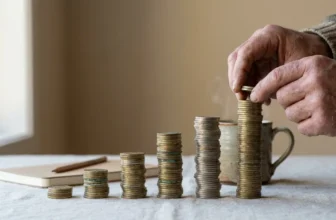

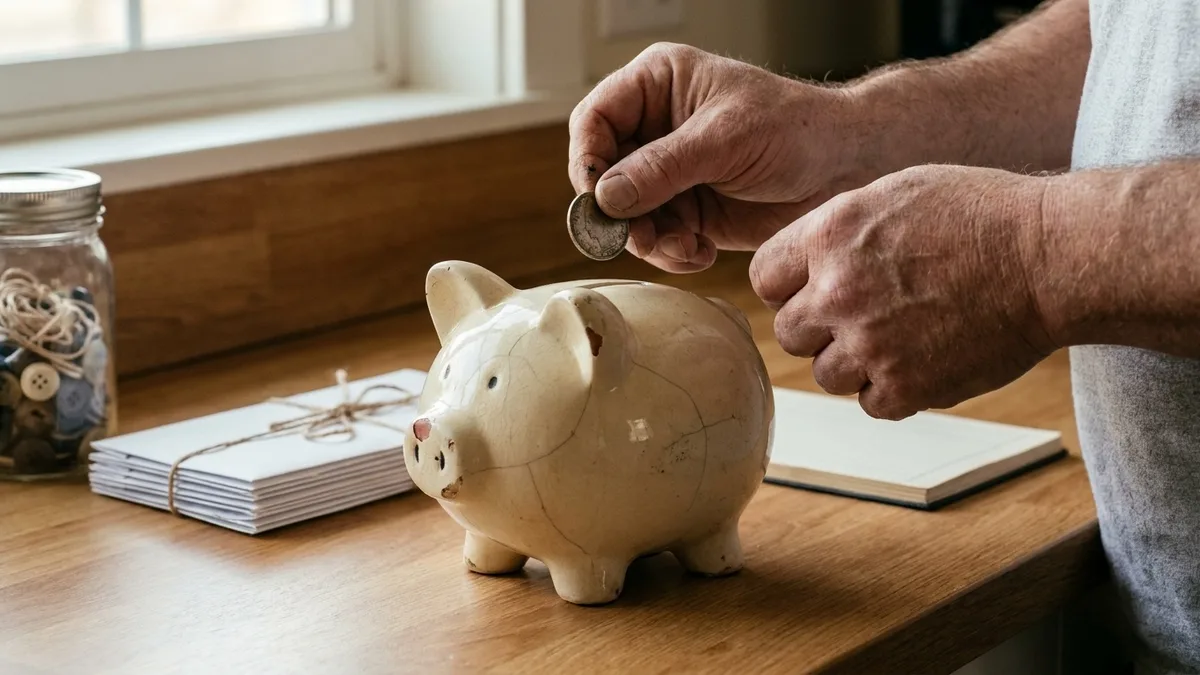
Getting this wrong costs $40 a month in duplicate snacks and $31 in subscriptions nobody remembers signing up for. I let both leak for years before I tested a single habit. My grandparents grew up in the 1930s, and I spent 12 months in 2024 running 17 of their money habits here in Columbus, Ohio, in a house with my wife and our kid, tracking what each one actually saved.
virtue is not the test. A habit that saved a farm household in 1933 can cost a 2024 household in storage space, in hours, or in a $35 tool that never leaves the closet.
So I graded every one the same way. Setup cost in dollars and minutes. Measured saving. A skip condition for the household it does not fit. Run one habit for a month, and let the number decide whether it stays.
If the grocery bill is where your month goes sideways, you can start there in about 15 minutes and know two habits to ignore this year without losing anything.
Quick Tips Before You Start
Track one week first
Write down every purchase for seven days before you change anything. It shows you where the leak is.
Start with cash envelopes
Pull $200 in cash on Sunday and split it into labeled envelopes. That is the whole setup.
Build a tiny repair kit
A $35 sewing machine, $22 bike kit and $18 tool set handled most fixes for us.
Make one phone call
Ask your internet provider for the retention department. One call saved us $15 a month.
1. Why the cash comes out once a week

Cash in six labeled envelopes, withdrawn once a week, and the autopay bills stay exactly where they are.
Rent and utilities never touch the envelopes. They pull from the account like they always have, and that mattered because I was not about to start missing a bill to prove a point. What the envelopes held was the money that had been leaking out in small card taps at the grocery store and the hardware aisle and the pharmacy counter, the $240 a week that never showed up as one number anywhere.
Every Sunday I took out $200 and split it across groceries, household, personal, kid, eating out, and buffer. Setup was about 15 minutes and $0 beyond the cash I was already spending. By week four the visible grocery and household total had dropped $40 a week, mostly because there was no card float to blur the number.
Start smaller if $200 feels like a lot to hold in paper. $100 a week in four envelopes does the same job, and the reason is simple: an empty envelope is a fact you can see, and a card balance is not. It is the stopping, not the amount, that is the point, and frugal living hacks that actually work build on the same principle.
The rule that carried it: when the envelope is empty, you stop. In week three I slid $20 out of the buffer into groceries and wrote the raid on the back, so next Sunday started $20 short. Households that buy almost everything online should skip this one, since you cannot split an online cart into cash. For everyone else it is low setup, measurable weekly, and a hard stop.
💡 Tip: If you raid the buffer envelope, write down the amount and start the next week $20 short. The record is what keeps the system honest.
| Habit | Setup cost | Monthly saving | Time to set up | Best for |
|---|---|---|---|---|
| Cash envelopes | $0 | ~$160 | 15 min | Card swipers |
| Sale-first meal plan | $0 | ~$80 | 20 min | Weeknight cooks |
| Repair kit | $75 | ~$55 | One afternoon | Renters with a closet |
| Pantry shelf | $0 | ~$40 | 10 min | Small kitchens with a shelf |
| Windowsill herbs | $28 | ~$12 in season | 30 min | Sunny kitchens |
| Canning afternoon | $60 | ~$30 | One afternoon | Small households |
| Secondhand first | $0 | ~$25 | One Saturday | Growing kids |
| Spending ledger | $0 | ~$40 exposed | 5 min a day | Detail people |
| Saturday errand loop | $0 | ~$12 | 15 min | Car-dependent households |
| From-scratch lunch | $0 | ~$188 | 40 min Sunday | Office workers |
| Home coffee | $42 | ~$100 | 10 min | Daily café buyers |
| Subscription audit | $0 | ~$31 | 45 min a year | Anyone with autopay |
| Library first | $0 | ~$15 | 10 min | Readers and streamers |
| Clothesline | $0–$35 | ~$25 | 20 min | Laundry households |
| Jar stash | $0 | ~$10 | 10 min | Shelf space havers |
| Bill negotiation | $0 | ~$15 | 30 min | No-contract bills |
| Savings envelope | $0 | ~$215 moved | 10 min | Steady paychecks |
2. Sale-first meal planning

You plan the week from the flyer first and let the protein stretch instead of the menu.
A cash cap only holds if the week's meals are settled before the money leaves your hands, so Sunday I sat down with the store flyer and a pantry scan – 20 minutes, no recipe app open – and built the menu before the list. The $200 grocery envelope stayed the cap, and a sale item went in the cart only if it fit the week's menu and the cash total. In week two I skipped the flyer and made two extra top-up trips. That is what the $200 was protecting.
The repetition fix was real: one sale chicken, roasted Sunday and turned into rice soup Tuesday, with a pantry-shelf dinner a third night. I ate that base three times, not five. If your weeknights move at the last minute, skip it – a flyer plan is stale by Wednesday.
3. The repair-before-replace kit

Build the repair kit before you need it: one closet bin, $75 total, and it pays its first repair cycle back.
Once the weekly food cap is set, the next avoidable spend is the replacement purchase, the $95 alteration shop, the $70 bike tune-up, the chair that gets thrown out over a loose leg. The kit I put together was a $35 sewing machine off a thrift shelf, a $22 bike tire kit, and an $18 tool set. All three went on one shelf in a single clear bin, and that bin is where my hand goes before I go anywhere near a store.
The rule: a loose hem, a slow tire, a wobbling chair leg gets 20 focused minutes before any shopping trip. Sometimes the 20 minutes ends in buying a part, and that still counts.
Safety-critical repairs go to a professional without a conversation. Brakes, gas fittings, anything holding weight over a head. I will happily hand someone a needle and thread and I will not touch a brake caliper, and both of those can live in the same sentence.
In the first month I took up the hems on two pairs of work pants and patched a flat on the kid's bike. The alteration shop would have charged $95 for the pants, the bike shop $70 for the tune-up. So $165 avoided against a $75 outlay, which is the whole arithmetic of the habit in one line.
The part that surprised me is that the kit is less about money than momentum. A hem that sits on a chair for a month becomes a $95 bill and a two-week wait. A hem you fix on a Tuesday night with a machine you own is 20 minutes and a shrug.
💡 Tip: Store the kit in one bin with a label. If you have to hunt for the sewing machine, you will pay someone else to hem the pants.
4. The pantry use-it-up shelf

$40 a month. That was the number my ledger handed me after 30 days of writing down every purchase, and it was almost all duplicate snacks and top-up runs I would have sworn I never made.
The stuck belief was that I already knew what was in my kitchen. I did not. So I cleared one shelf at eye level and made it the use-it-up shelf: opened grains, half jars of sauce, the bag of almonds I bought twice in a week, leftovers that needed eating first. Setup cost nothing but a shelf and a ruthless five minutes, and the upkeep is a 10-minute scan once a week, usually Sunday before the store run.
That scan is the whole mechanism. Duplicates happen because the second jar is invisible behind the first, and a visible shelf puts it back in front of you before your money leaves. The fix is not willpower at the store, it is sight lines in the cupboard.
Once a week I cook one dinner straight off that shelf, and I log it in the meal plan as a shelf dinner so it doesn't quietly get skipped. Half a box of pasta, the end of a jar of sauce, greens going limp in the drawer. It is rarely a recipe, and it is always cheaper than a top-up trip.
Skip it if your kitchen is small enough that a dedicated shelf would cost you real counter or cabinet space. The whole saving turns on storage. For a household with a shelf to spare, it is $40 a month in duplicates plus less food going in the bin, and no calendar to keep.
⚠️ COMMON MISTAKE
The pantry shelf is not a stockpile
The mistake is turning the use-it-up shelf into a second pantry. Keep one shelf, eat from it weekly, and let the rest of the cupboard stay closed.
5. Windowsill herb garden

It is easy to overestimate the herb garden because it feels like a small triumph, so give it a real review at the end of the season instead of trusting the feeling.
I bought $28 of starts and seeds and potted basil, parsley and mint on a south-facing sill, then stopped paying $3 for a plastic pack every time a recipe asked. Watering was every other day. The honest check at the end of summer asks three things: how many $3 packs did I actually skip, did the plants keep producing, and did anything die because the windowsill has no sun or I was away too often.
Keep it if the packs stopped being bought and the plants stayed alive. Drop it if the sun is wrong or you travel, because a dead pot is just a $28 habit you no longer use.
6. Seasonal canning afternoon

I stood in my kitchen one Saturday in August, a produce box on the counter and $60 of jars and lids still in the bag, and I want to tell you what nobody says out loud: a small household should not try to fill a cellar.
The mistake I watched myself almost make was turning one afternoon into a production. That is what makes people quit. The fix is modest by design. One afternoon, one produce box, tomatoes and beans into jars, then stop. The jars are reusable, so after the first run your setup cost for the next season is mostly lids.
Those tomatoes and beans fed into the season's haul, about $190 across tomatoes, beans and herbs, but be honest about the payback. The first year is thin against $60 of jars and lids. The math tilts your way in years two and three, when the glass is already on the shelf.
Two things I would not bend on: a small kitchen with no room to cool the jars, and a tested, safe canning guide. I used one and turned down a low-acid recipe from a blog, because a bad jar is a health cost, not a saving.
Skip it if the kitchen is cramped or you have no tested guide. A small household with an afternoon to spare and jars that live on a shelf gets a modest first year and a better second one.
💡 Tip: Buy jars once and lids every year. The jars are the cost that keeps paying you back.
7. Secondhand-first shopping list

The worry is that buying used means settling for someone else's castoffs, and that you will spend the difference in time and regret. I had that worry too. Then I priced a new winter coat for a seven-year-old and stopped having it.
The structure takes one line to explain. Keep a running list on the fridge door of things you actually need, not things you might want. Add the item the day it comes up. When the list gets to three or four items, spend one Saturday hitting the consignment stores on your side of town before you open a single retail site. Anything still on the list after the loop you buy new. That is the whole system: list first, stores second, new last.
Some categories take this better than others. Coats, kids' books, solid wood furniture, bikes and garden tools all show up used in good condition because people outgrow them or move. Textiles and metal hold up. Things with an expiration date on their safety do not.
In Columbus, $140 bought used winter coats for all three of us. My son wore his through the 2024-25 winter without a single complaint, and the $140 was the entire coat spend for the household that year. New, one good kid's coat alone runs $60 to $80.
Here is the hard line, and it does not bend. Car seats, bike helmets, and anything whose job is to protect you in a crash get bought new. A used helmet has a history you cannot see, and a car seat has an expiration and an unknown crash record. No thrift-store helmet, no hand-me-down seat. The saving on those items is not worth the risk you cannot measure.
What it costs you is the Saturday. Consignment inventory is random, so you may drive to two stores and come home with nothing. That happened to me twice before the coat trip. The skip condition is honest: if you need an exact size by a specific date, or you are shopping for anything on that safety list, buy new and don't feel bad about it.
The reuse frame carries over from food. You already use what is in the pantry before buying more. This does the same thing for the closet and the garage.
Secondhand-First Rules — At a Glance
🧥 Safe to buy used
Coats, books, furniture, bikes, garden tools
🪖 Always buy new
Car seats, helmets, safety gear
💵 Our coat spend
$140 for three
🔍 Check before paying
Seams, zippers, soles
⏳ Watch the waits
Exact sizes may take weeks
The one rule
If it has a safety record, it does not go on the thrift list.
8. Pocket spending ledger

The common belief is that a budgeting app has you covered, that if the categories are set and the transactions import, you know where the money goes. I believed that for two years. What the app never showed me was the six small top-up runs in a single week that each landed under its own category.
So I wrote down every purchase for 30 days in a phone note. Not a spreadsheet, not a new app, just a line per purchase. It took about five minutes a day. The ledger found $40 a month in duplicate snacks and second top-up trips for things already in the fridge. The app had the categories right and the repeats invisible.
The honest cost is the tedium, and the fact that a notebook has gaps. I missed two cash purchases in week one. Instead of starting over, I added a line called cash-unknown and kept going, and the pattern still surfaced in week two because small repeats are consistent even when the record is not.
That is the trade-off. You give up five minutes a day and the comfort of trusting the app, and you get a straight look at the leaks the categories hide. If you know you will quit after three days, skip it and keep the app. If you can hold a note for a month, the $40 is usually there to find.
The ledger's real value is that it changes what you reach for next, which is exactly why it sits next to the purchases themselves rather than the budget.
9. One-loop Saturday errand run

Take the four separate short car trips you make in a week and turn them into one planned loop on Saturday.
I mapped a 9-mile loop: grocery, hardware, library, pharmacy. Fifteen minutes with a map, and it saved roughly $12 a month in gas. It also forced a list before I left the house, which cut the impulse stops. The time pressure matters more than the gas math. Every week you drive four separate trips is a week you pay the extra, and the saving compounds across the year.
One Saturday the library was closed. The loop became grocery, hardware, pharmacy and still saved the separate trip. I did not drive back across town. Skip it if you have no car or your errands are already batched.
10. From-scratch lunch kit

The first Sunday I stood at the counter with $18 of groceries, I honestly expected to be back at the takeout counter by Tuesday. Five containers lined up instead: grain, protein, vegetable, and a small jar of sauce for each. Rice or pasta, beans or chicken or egg, whatever vegetable I had roasted or left raw, sauce on the side. I changed the sauce every week and kept the cooking method identical. Forty minutes, containers I already owned.
The sauce is not a garnish. One week I skipped it out of pure laziness and the lunches sat untouched in the fridge by Wednesday. Dry rice and plain chicken will lose to a $13 deli sandwich every time. Five takeout lunches run $65. Five packed ones ran $18. That is $47 a week, which is the largest daily leak I found after groceries themselves.
This fits an office worker with a fridge and a Sunday hour. If your week is client sites and gas stations, skip it. And if you cannot get to the sauce, it is not your discipline, it is just dry food, and the fix costs about a dollar.
11. Home coffee station

The myth is that a home coffee setup saves real money only if you turn it into a hobby, weighing beans and chasing a perfect pour. It doesn't take that. My whole setup was a $12 bag of beans and a $30 grinder on a shelf by the kettle.
Set it up once and leave it alone. Beans go in the cupboard, the grinder sits next to the kettle, and the only decision left each morning is whether you press the button. That is the automate-it part: the station does the work because it is already there, not because you will feel disciplined at 6:40 a.m.
The comparison is one $4.75 café latte. Thirty of those would run $142.50, and thirty cups from my $12 bag cost about $42 all in, grinder included. That is roughly $100 saved over the life of one bag, and the saving shows up within that first bag, not after a year.
What I didn't do was swear off the café. I still bought one latte on Fridays, and the station made it a treat instead of the default. That is the honest trade-off: the setup only pays if the daily cup was already a daily purchase.
Skip it if you don't drink coffee or already drink free office coffee. If you are a daily café buyer, a grinder, a bag of beans and a clear shelf cost about $42 and start paying back the first week.
The first step today is small: check what your usual cup costs, then price one bag of beans and a basic grinder. If the gap is lopsided in your favor, set the station up before Monday and let it be the easy thing waiting by the kettle.
💡 Tip: Put the grinder on the counter, not in a cupboard. Visible equipment is the difference between $42 well spent and $42 gathering dust.
What the ledger and the envelopes each catch
Pocket ledger
- Shows repeats an app smooths over
- Five minutes a day
- Catches cash spending
- Best for detail people
- $40 a month leak found
Cash envelopes
- Shows the total in your hand
- Stops at empty
- Harder to hide top-up trips
- Best for card swipers
- $40 a week held back
12. The recurring-charge audit
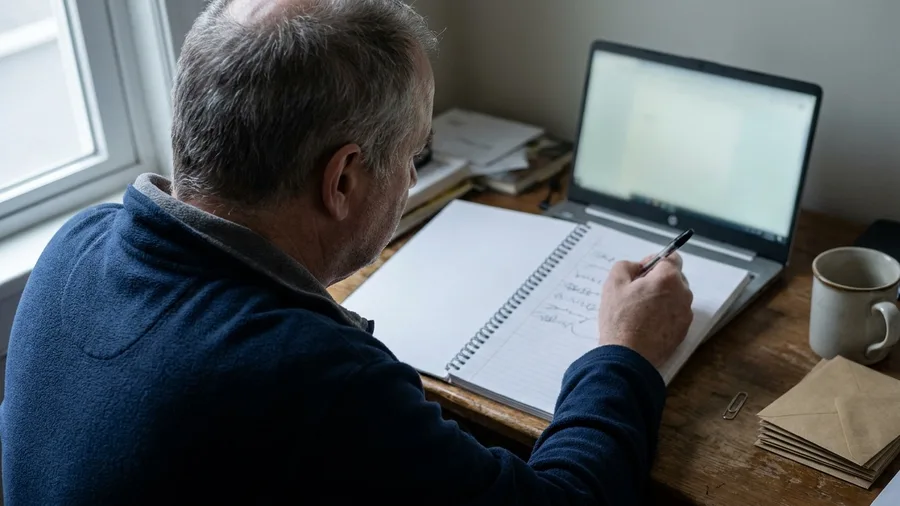
The dread is that auditing your subscriptions will turn into a two-hour spreadsheet project you abandon by the second tab. It won't. You do not need a personal finance professional for this one, either, just 60 days of statements and 45 minutes. That is roughly 10 cents a month per dollar reclaimed.
I did it once in January, scanned every card and bank line, and found three charges the household had forgotten about: a streaming tier, a storage app, and a news trial that had rolled over. Together they were $31 a month. I cancelled them and moved on.
You can scale this down to one account at a time, one evening a week. That still beats the 45-minute version only if you actually do it. Skip the whole thing if you have no autopay set up. For everyone else, this is the cheapest hour you will spend all year, and the recurring-charge audit catches what the coffee station, the pantry shelf and the envelope system all quietly hide.
What 12 Months of Testing Actually Saved
13. Library-first entertainment rule

For us it was, and the trick was treating the card as the first stop rather than the last resort. Setup cost was $0 and about ten minutes at the branch counter; I walked out with a card and a holds list, and that was the whole investment.
Over the year we checked out 22 books and 8 DVDs that would have cost roughly $180 bought new. The modern swap matters here: when the branch is closed or a title is only digital, the same card gets you e-books and audiobooks through the library's app, so the phone in your hand becomes the branch.
The catch is the wait. A new release can sit at 14 holds deep for weeks, and I am not patient, so I bought exactly one hardcover I wanted on release day. Everything else I put on hold and forgot about until the notification came. Library first, not library only.
If your branch is a 30-minute drive or the wait on the one title you actually want runs past a month, skip it; the time cost eats the saving. Everyone else: get the card this week, add three titles to the holds list, and let the first pickup do the convincing.
14. Clothesline drying routine

$25 in one month. That was the drop when I started hanging a couple of loads a week instead of running the dryer on everything, and it came off a bill that had been sitting at $96. Not every month matched it. The direction held, and the direction is what you're buying. This is a habit where starting now beats starting in spring, because every week you keep feeding the dryer is a week the meter runs for free.
Setup was already in the yard, so it cost me nothing, though a folding rack runs about $35 if you rent or the weather won't cooperate. The dryer still handles heavy items. The routine is one or two loads on the line, spaced out, which matters more than it sounds.
I got this wrong at first. I hung towels too close together and they dried sour, and I had to wash them again, which is the exact cost the habit is supposed to avoid. Spacing them and adding a second line fixed it. Skip this if there's no outdoor line, no rack space, or a pollen allergy in the house.
15. Jar and wrapper stash

The part nobody warns you about is that a good stash can quietly turn into a closet full of yogurt tubs you will never use. I felt that pull about four months in, when the shelf by the fridge was so packed I could not find a lid.
Here is the usable rule I landed on. Glass jars, sturdy takeout tubs and bread bags are worth washing and keeping; flimsy single-use plastic, cracked lids and anything that smells like last week's curry go straight to recycling. Setup was one small shelf and about 10 minutes of washing after the week's groceries got put away.
What the shelf actually replaced was the slow drip of storage purchases: freezer bags, matching containers, the produce bags I used to buy by the box. Jars held grains and leftover sauce, tubs went into the fridge with Tuesday's dinner, bread bags kept greens from wilting before Friday.
The honest trade-off is space and attention. A shelf that fills up becomes a chore, and the line drying routine only helps if the kitchen around it stays workable, not crowded.
So I capped it at eight jars. When the ninth arrived, an older one went to recycling; no negotiation, no keeping both because they were different sizes. That single number did more for the system than any organizing bin I could have bought.
The saving is real but modest, mostly avoided container and bag purchases across the year. It is worth doing if you have a shelf and a light hand, and worth skipping if you already know you hoard round plastic.
Wash one jar tonight, put it on a shelf, and see whether you reach for it before the box of bags. That tells you more than any rule I can give you.
16. Annual bill-negotiation call

Call the provider and ask to be transferred to the retention department, then ask, plainly, for a better rate on the plan you already have. Not a new package, not a bundle you'll never use. The current plan, a lower number. That's the whole script, and you can read it off your phone.
I did it once, in a 30-minute window that included the hold music, and my internet came down $15 a month for 12 months. That's $180 for half an hour. Call it out loud: $360 an hour.
But this is where I give you permission to skip it. If your bill is locked in a contract, the early-termination fee can eat more than the discount, and no call is worth that. I left our phone bundle alone for exactly that reason. Same if the best they offer is a $5 credit and you'd spend 40 minutes on hold – your hour is worth more. Start with one bill, not the whole stack; if that first call returns nothing, you don't owe anyone a second one.
💡 Tip: Put the call on the calendar the month the promotional rate ends, not when the bill goes up.
Which Habits Fit Your Household?
17. Set-aside savings envelope

Savings doesn't show up at the end of the month. You have to take it off the top, the same way rent leaves whether or not you feel like paying it, or the money a lower bill just freed will quietly get absorbed back into the same spending before you notice it's gone.
The structure I used: $215 a month, moved automatically on payday, or dropped by hand into a labeled envelope, and the setup with the bank took ten minutes. The label matters as much as the amount. I wrote emergency fund on it, not savings, because $3,000 sitting under a vague word is a number you can talk yourself into raiding. An emergency fund has a job, and it isn't a weekend away.
Fourteen months of $215 got that envelope to $3,000. That's the math: small amount, kept boring, finishing faster than a hero month followed by nothing.
Where the $215 came from is the point. For us it was the cash envelopes, the spending ledger, the canceled subscriptions and one negotiated bill, all passing their dollars forward to one place. If your paycheck is irregular, run a smaller fixed number, $50 or $25, and hold the rest for the months the work comes in; a steady paycheck can carry the full $215. Ten minutes to automate, then leave it alone.
Frequently Asked Questions
Are cash envelopes still practical when most bills are automatic?
Yes, because the envelopes do not have to cover your bills. Keep rent and utilities on autopay and use cash only for the discretionary money that blurs on cards. We ran $200 a week across six labeled envelopes and cut visible grocery and household spending by $40 a week.
Which of these habits saves the most per hour of setup?
The bill-negotiation call, by a wide margin. Thirty minutes on the phone saved $15 a month for 12 months, $180 total. The subscription audit is second: 45 minutes a year found $31 a month. Both are one-time efforts that keep paying.
Do I need to do all 17 to see a difference?
No, and trying to do all 17 at once is the fastest way to quit by February. Pick the one where your grocery or lunch spending hurts most, run it for a month, and measure it. If it saves real money for your household, keep it; if not, drop it.
What if I have no storage space for a pantry shelf or jar stash?
Skip those two. The pantry shelf and the jar stash both depend on having a shelf to spare, and forcing them into a tiny kitchen turns thrift into clutter. Put that energy into the spending ledger or the subscription audit, which need no space at all.
Is line-drying worth it if I rent an apartment?
A folding rack costs about $35 and works indoors if you have floor space and a window. Our line-drying cut one electric bill from $96 to $71. If you have no line and no rack space, skip it; the $25 a month is not worth a mold problem.
Should I use a repair kit for everything to save money?
No. Safety-critical repairs — brakes, gas fittings, anything electrical — go to a professional, and anything under warranty goes back to the manufacturer. The kit is for low-stakes fixes like hems, flat bike tires and loose chair legs. For those, our $75 kit avoided $165 in the first month.
What Four Weeks Changes In Dollars
Start with the weekly cash envelope system if the grocery bill is the pressure point. Six labeled envelopes, one Sunday withdrawal of $200 in cash, autopay bills left untouched. Setup is about 15 minutes, and the envelope tells you the truth by Thursday.
Skip the pantry use-it-up shelf if you have no storage, and skip the canning afternoon if you have no spare Saturday. Those are real habits with real savings, and they are not your first move.
The 1930s list was never a virtue contest. Run through the 2024 Columbus test, it becomes what it should have been all along: tools with a price, a measured saving and a reason to walk away. Run one habit for a month. Keep it only if the saving survives the time and the shelf space it costs. Then start the next envelope.
Pull $200 in cash this Sunday
Split it into labeled envelopes, stop when the grocery envelope is empty, and see how much of the $240-a-week leak you can close in one month.