
I once put $3,000 on the supplies line because it felt about right, then spent a spring explaining why nothing behind it produced $3,000 exactly. Don't repeat that.
Now look at a real page. A single filer in Austin took in $92,400 from six clients, reported $51,400 of freelance income, claimed $44,600 of Schedule C expenses, and asked for a $9,700 refund against $1,200 the year before. No single figure there is absurd. The combination is what a matching program reads first, because the attention lands less on the size of the refund than on lines whose numbers do not line up with forms the IRS already holds, the car's odometer, or a receipt file.
So the job is not to make the return look small. It is to make every line trace to a 1099, a receipt, a log, or a statement.
Nine flags follow, ranked by how fast each turns into a letter. Fix the first one this evening, assemble the file, and if a letter arrives you will know exactly which page to open.
Quick Tips Before You Start
Trace every total
Add up the actual receipts and bank statements and report the resulting figure, odd cents and all.
Pull your transcript
The IRS account transcript lists every 1099 filed under your name, so compare it line by line with your return.
One folder per line
Supplies, travel, contract labor, home office: each gets its own folder of source documents before filing.
Photograph the space
If you claim a home office, take dated photos of the room showing the desk and measuring the square footage.
Keep a mileage log
Date, destination, purpose, and odometer readings beat a reconstructed annual total every time.
Numbers that don't line up
The first three flags are the ones a matching program can spot without a human ever opening the file. They are arithmetic problems on the face of the return, and they are the cheapest to fix.
If you only look at one group before filing, look at this one. It is the difference between a return that gets processed and a return that gets a letter.
1. Round numbers everywhere read as estimates

The belief is that round numbers only look sloppy, not suspicious. In practice the matching and review systems are built to flag a return that reads as reconstructed rather than recorded, and a page where every figure ends in 000 is the clearest picture of a figure someone guessed at rather than added up.
A $5,000 supplies line and a $12,000 cash contract labor line are not red flags because they are large. They are red flags because no receipt, card statement, or bank record naturally lands on exactly that number — the problem is the missing source, not the size. Tracing it properly costs a real evening: pull every receipt and statement, add them, keep the odd cents. A traced total of $5,183 reads as recorded. And a genuine $5,000 invoice, with the invoice still in the file, is not the same return at all.
The trade-off is the hours. The payoff is a number that survives a letter.
💡 Tip: Report $12,847.32 instead of $12,000. The cents are what a traced total looks like.
| Red flag | What the return shows | What to have ready |
|---|---|---|
| Round numbers | $5,000 supplies, $12,000 contract labor | Receipts and statements producing the exact total |
| Missing 1099 income | $51,400 reported vs $92,400 received | IRS transcript and each 1099-NEC |
| Thin profit | $44,600 expenses on $51,400 income | A paid record behind each expense line |
| Shared home office | $3,150 for 180 sq ft of a 1,600 sq ft rental | Photos, measurements, rent statement |
| Impossible mileage | 26,000 business miles on a 19,800-mile odometer | Contemporaneous log with odometer readings |
| Vacation-shaped travel | $6,900 travel and $4,300 meals, including 9 days in Lisbon | Day-by-day split of business vs personal |
| Noncash gifts | $7,500 of clothing and furniture, no receipts | Itemized list, drop-off receipts, appraisal if needed |
| Years of losses | Losses in 3 of 5 years | Business plan, marketing spend, separate accounts |
| Refund spike | $9,700 refund vs $1,200 last year | A document for each driver of the jump |
2. Missing 1099 income gets matched automatically

If you are bracing for what happens when you forget a 1099, here is the reassuring part: you do not have to reconstruct your whole year to fix it, and forgetting is not the same as hiding. The form exists either way. A client sends the IRS the same 1099-NEC they sent you, so the gap shows up in matching before a person ever opens your return.
In a typical case like this, $92,400 came in from six clients but only $51,400 of freelance income made it onto the schedule. One $41,000 1099-NEC simply never landed there. The client filed the form whether or not that job came to mind at tax time, because the form's existence does not depend on your bookkeeping.
You can scale the fix down to something manageable this week. Pull your IRS account transcript, list every 1099 on it, and check each one against the income lines on your return. That is the whole reconciliation — one line at a time, not a full redo.
What follows if the gap stays is a notice proposing added income and the tax on it. Correcting the return before you respond is an option, and the two documents that settle it are the 1099 and the bank deposit behind it.
If the list feels overwhelming, do the two largest forms first and leave the rest for next weekend.
💡 Tip: The transcript is free and available in your IRS online account. Pull it before you file, not after.
The number on the return is not the problem. The missing document behind it is.
— The line every examiner keeps coming back to
3. Expenses that erase almost all the profit

Stop trying to make the profit look bigger than it was. A thin year is a perfectly normal thing for a real business to have, and making the number more impressive on the page is exactly the instinct that turns a thin year into a notice.
$44,600 of expenses against $51,400 of reported income, leaving $6,800 of net profit. A business that collects real money and nets almost nothing is not automatically wrong — but it does invite the question of whether those costs were actually business costs, and the return has to answer that question with paper rather than with confidence.
The weight lands on two lines. The $12,000 of cash contract labor and the $6,900 of travel are large, close to cash, and easy to describe in loose terms. Those are the ones a reviewer reads twice.
The reframe is this: the flag is never the size of the expense. It is the gap between the amount and the evidence.
Support for a contractor is a paid invoice or a bank record showing the money left. Support for travel is receipts plus the purpose of the trip, written down while it is still fresh. Every expense line on the return needs a source that matches it to the dollar, and once each one does, the thin year stops being a problem.
If a letter ever asks, the plain answer is the strongest one: the year was genuinely thin, and here is the document for every line. No apology, no reevaluation, no rounded-down number offered up to look reasonable.
The mindset to leave behind is that a small profit looks guilty. A traced one does not.
💡 Tip: Pull the $12,000 contract labor line first. Cash payments with no bank trail are the thinnest part of this return.
⚠️ COMMON MISTAKE
The mistake that starts the letter
Reconstructing a total in January from memory is how round numbers and missing income happen. Total the year in December, from the records, while the receipts are still findable.
Claims that need proof
The next four flags are different in kind. Nobody can spot them by matching a form. They only come apart when someone asks for the document behind the claim, and that means the file matters more than the number.
Each of these is defensible with records and indefensible without them.
4. An office in a shared room fails exclusive use

The quiet worry here is that the second you describe the desk to someone, the whole setup sounds smaller than the space the return implies. So audit it before anyone else does: measure the room, read the square footage back against the rent, and confirm the area is used for nothing but the business.
IRS Publication 587 is the page that decides the question, and its exclusive-and-regular-use requirement is strict. On a 1,600 sq ft rental at $2,100 a month, a 180 sq ft room carries roughly 11 percent of the rent, which is where the $3,150 figure on the return comes from. The claim only holds if a tape measure and a floor plan agree with that 180.
Look at three things on a calendar check: the measured square footage, photos of the room standing empty of anything personal, and the rent or mortgage statement tying the space to the percentage. If the room also holds a guest bed or the kids' toys, drop the claim and file without the $3,150. A return missing one deduction is a return you can stand behind.
Where the $3,150 Breaks, Line by Line
📐 Square footage that keeps it
180 sq ft — to the inch
💵 The math on rent
$2,100 × 11.25% × 12 = $2,835
⚠️ Overclaim on the rent share
About $315 — fixed by exact numbers
🛏️ If a bed lives in there
Claim is $0. Method to file instead
📸 Photos that count
Door plus tape measure in frame
The failure mode
Partial use kills the whole deduction. There is no discounted version — it is $3,150 or nothing.
5. Mileage the odometer cannot possibly support

Because the odometer is a number the state already holds, and 26,000 business miles on a vehicle that logged 19,800 in a year is a subtraction anyone can finish in a minute. Space is measured from the outside; miles get checked against the car's own record.
The fix is a log, not a memory. IRS Publication 463 asks for a contemporaneous record, built as you drive, and the version the IRS accepts carries four things per trip: the date, where you went, why, and the odometer reading at both ends.
A one-page spreadsheet with those columns is the whole system. Add two rows on January 1 and December 31 that record the starting and ending odometer, so the year's total sits in a cell below them. If business miles ever push past that total, you already know before the return does.
Keep the file in the glovebox or on the phone, whichever you'll actually use mid-drive. A lower documented number beats a larger one you can't show: if the log honestly comes to 9,000 miles, report 9,000 and let it stand behind a paper trail. Consistency matters more than the size of the deduction.
💡 Tip: A mileage app that records trips automatically is the easiest version of a contemporaneous log.
Travel that holds up vs. travel that gets trimmed
Defensible
- Every day of the trip has a business purpose written down
- Receipts split by day, not one lump total
- Names of who was present at each meeting
- Family days listed separately and not deducted
Gets trimmed
- Nine-day trip with two meeting days deducted in full
- $6,900 travel claimed as one undivided figure
- No date-by-date split between business and holiday
- Meals lumped in with no purpose noted
6. Meals and travel that blur into a vacation

I booked nine days in Lisbon around two meeting mornings, and for a week I told myself the whole trip was business because the meetings started it. Then I sat with the numbers.
The return carried $6,900 of travel and $4,300 of meals, and somewhere in the middle of that number were afternoon tours, a birthday dinner, a museum ticket with nobody's name on it. That's the mistake in a sentence: the trip was mixed, and the return reported one undivided total instead of a split.
The rule isn't that you can't take the trip. It's that a mixed trip gets trimmed to its business portion, and the burden of drawing that line falls on the return, not on the auditor.
IRS Publication 463 walks through how the business portion is figured. What the return actually needs is the day-by-day split: what those two meeting days cost, separately from everything else.
So I rebuilt it as a table. Four columns: date, business purpose, who was in the room, and the receipt for that day. Six March dates filled in. The other nine got left off the return, and the deduction shrank. That shrink is the smell the return needs.
Dates, purpose, people present, receipts split per day. If you can't name who was at the table, that meal is personal, and putting it on the return invites a question you can't answer.
An all-business trip documented day by day is a different case, and it should show as one. The flag is the mixed trip that arrives as a single lump with no split behind it.
The fix is cheap: one evening, a calendar, and a decision to leave nine days of a good trip off the return. You keep the memory and lose a line item. That's the trade, and it holds up.
💡 Tip: Write the business purpose of each meeting day on the receipt itself. It takes ten minutes and it is the document you will be asked for.
⚠️ COMMON MISTAKE
Do not shrink the number
The instinct when a line looks risky is to lower it. The better move is to trace it, prove it, or correct it. A smaller unsupported number is still unsupported.
7. Noncash gifts with no receipts behind them
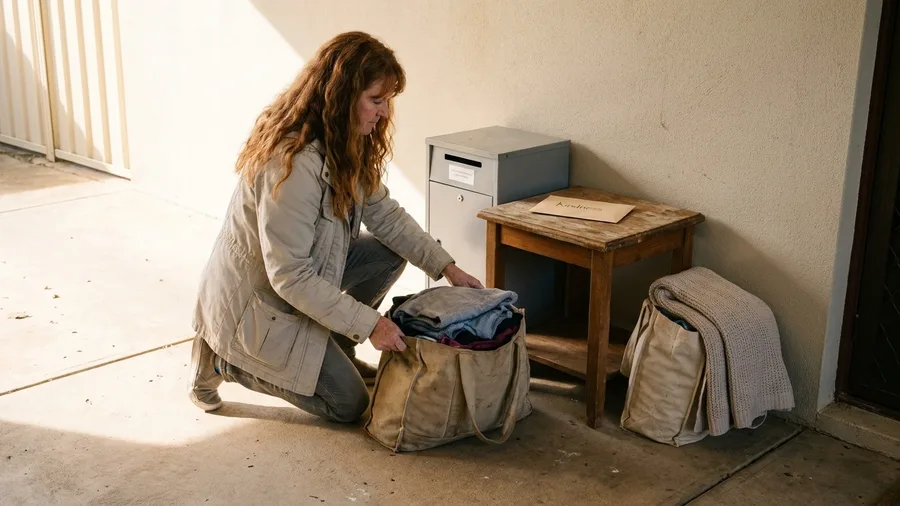
Build the clothing and furniture donation file before you file, and build it from things you can actually put your hands on. The return in front of us claims $7,500 of noncash gifts sitting next to $600 in cash, and the $7,500 has no itemized list, no dated drop-off receipt, and no appraisal behind it.
Start with the list you should have kept. Walk through what you gave away, name each item, and put a condition on it — good, fair, worn — because a bag described as "clothing" is worth nothing on paper while a list of fourteen items with condition notes is worth defending. Then find the drop-off receipt from the charity and photograph it, and take pictures of anything still in the house that you meant to donate.
What each value band requires is spelled out in IRS Publication 526 and the Form 8283 instructions, and the return needs that form plus the records it names, not a total you remember. The $600 cash gift is the easy half: one bank or card statement shows it left your account, which is why cash donations almost never draw a question. The $7,500 is the half with no built-in source, because nobody hands you a receipt for a couch.
If the list comes up short, drop the number to what the list supports and keep the list. A smaller gift with a paper trail behind it survives a letter. The $7,500 with nothing behind it does not.
💡 PRO TIP
Ask for the dated receipt on the day
A charity will hand you a dated receipt for donated goods if you ask at drop-off. Ask every time, and photograph the items before they go in the bin.
Patterns across years
The last two flags need context. They are not arithmetic problems and they are not a missing receipt. They are patterns, and they only show up when a return is read against previous years.
This is why a return that looks fine on its own can still draw a letter. It is not the year. It is the shape of several years together.
8. A business that loses money year after year

Three losing years out of five, then a $6,800 profit this year, is a pattern a return has to answer with records rather than a sentence. The question underneath it is whether the activity is a business or a hobby with deductions attached, and the IRS hobby-versus-business guidance lists the factors it weighs — profit history first among them.
Set up the evidence once and stop rebuilding it every April. Keep a separate bank account and card for the business so every expense and deposit has its own trail, put the business plan and any marketing spend in one folder with dates on it, and log the hours you actually work in the business in the same place month to month. Then leave it alone until filing.
Profit in most years with one bad year is a different case entirely. A single down year needs no defense at all.
💡 Tip: Keep a separate business bank account. It does more to show intent than any paragraph you could write.
9. A refund that jumps by thousands invites review

Pull last year's return and set the two bottom lines side by side before you sign anything, because the gap between them is what a computer at the IRS sees first. A refund of $9,700 where the prior year showed $1,200 is a number several times its own history, and a screen built to spot sudden swings will pull that return for a person to look at. That does not mean the refund is wrong. It means the return now has to explain itself.
Do the explaining yourself, in advance. On a sheet of paper, list every driver of the swing: the withholding taken out of the $38,000 of wages, each credit claimed, and the business loss that dropped $6,800 of net profit into the refund figure. Beside each one, put the document that produces it. When the letter comes asking for supporting records, you mail back exactly what is on that sheet, unedited and in full.
The realistic outcome here is a slower check, not an accusation, and the letter that arrives is a request for paperwork rather than a verdict. Answer it with the same receipts, logs and 1099s the return was built from. If filing day is close, resist the urge to trim a deduction so the refund looks ordinary. A corrected number is defensible; a quieter one leaves you holding a return you cannot explain.
Frequently Asked Questions
Will I get audited if I claim a home office?
Not automatically. The deduction draws attention when the space is not exclusive. If the room is used for anything besides business, leave the claim off. If you have a dedicated space, keep photos, measurements, and the rent or mortgage statement, and the deduction stands on its own.
What happens if I forgot to report a 1099?
The IRS already has that 1099. You will typically get a notice proposing added income and tax. You can correct the return before responding, and the source documents are the 1099 and the bank deposit. Fixing it yourself is almost always cheaper than waiting.
Is it suspicious if my business shows a small profit?
Not by itself. A thin year is normal. What draws attention is a thin year where the large expense lines cannot be traced. Support each line with a paid invoice or bank record, and a small profit is just a small profit.
How long should I keep my tax records?
Keep the return and its supporting documents for at least three years after you file. If you claim a loss on a business or file a claim for a credit, keep them longer. If you are unsure, the IRS publishes the record retention periods.
Should I file an amended return if I spot an error?
Yes, if the error changes your tax. Correcting it before the IRS contacts you is the cleanest path. The amended return plus the source documents is the answer, and it is always better than waiting for the notice.
Ranked by how fast each one turns into a letter
Ranked by how fast each turns into a letter: the missing 1099 income first, then the refund jump, mileage beyond the odometer, expenses that erase the profit, a shared-room home office, noncash gifts without records, mixed meals and travel, round numbers, and multiyear losses last.
With one evening, fix the 1099. Add the $41,000 1099-NEC to Schedule C so reported freelance income becomes $92,400, and let the refund, withholding, and credits recalculate from the corrected income. That is the line most likely to generate a letter, and the only one you can repair entirely alone.
Across all nine, the fix is documentation and correction, never a quieter number. A deduction you cannot support and remove is correction; an accurate one you keep and can show is defense.
The $9,700 refund was never the problem, and neither was $51,400. The $41,000 form already on file and 26,000 miles on a 19,800 odometer were. If a letter comes, read the notice number and the publication it cites before you answer, and pull the receipt behind each line the way you should have the spring I did.
Pull your transcript tonight
Log in to your IRS online account, print the transcript, and compare every 1099 against your return line by line. That one task handles the fastest-moving flag on the list.