


Everyone else seems to be clearing thousands a month from a laptop, and you are doing the arithmetic on five spare hours. Here is what closes that gap: almost nobody is running one stream.
Your suspicion is aimed at the right number. $10,000 a month with no boss and no commute sounds like a headline, and the biggest single earner on this list is a paid newsletter at $3,400. Nothing here produces five figures by itself.
In the example month it adds up anyway: newsletter $3,400, template shop $2,800, print-on-demand $2,300, gear rental $900, garage bay and two parking spots $600. Five streams, and only two of them were live before month six.
'Lazy' means no boss, no commute, no client calls, and work you can pause for a week. It does not mean zero hours. Each stream costs 2 to 12 months of front-loaded work, then the whole set runs on about 15 hours a week.
Price your own situation as you read: cash on hand, five to ten spare hours, a garage, a field you already know. Take the two or three that fit, and put one file or listing live this week at a real price.
Quick Tips Before You Start
Track revenue and profit apart
A $2,300 print-on-demand month and a $2,300 profit month are different numbers; write down both.
Time the front-load first
Count the hours before the first sale, because that burst is the real price of entry.
Check the lease and the city
Renting a spot, a bay or a vehicle can break a lease clause or a local rule; check before listing.
Give each stream one quarter
Nothing on this list pays in week three; judge it at month three with real numbers.
Set aside the tax cut
Move a fixed share of every payout into a separate account, because self-employment tax is not withheld.
1. Print-on-Demand Shop With No Inventory

Print-on-demand is a folder of your design files sitting on a platform that prints the shirt, prints the mug, and mails it to a stranger while you are at work.
About $7 of each order lands with you. Nothing is bought up front beyond a $0 to $50 account setup, nobody drives to a post office, and no buyer ever asks you a question on a call. The trade is on the other end of the calendar: 40 to 60 designs, all inside one searchable theme, and 2 to 4 months before the first $1,000 shows up. A theme like a single dog breed or one hospital job title is what keeps getting found twice a year while you touch nothing. That is the cost, and it is paid in a batch of evenings you will not enjoy much.
Then the shop runs itself at around 3 hours a week, and 330 orders a month is what it takes to clear $2,300.
Here is the part that sinks people. Designs nobody types into a search box sit in a shop doing a dozen orders a month, and the exact same hours of drawing inside a searched theme would clear those 330. You will not know which one you picked until about month three.
It still earns its place, because the front-load is heaviest and the weekly hum is smallest of anything here. If you will make art in two big pushes a year and then walk away, this is the ratio to want.
💡 Tip: Search the platform's own storefronts for your theme before you draw anything. If the top sellers have 400 reviews, pick a narrower angle.
| Hustle | Startup cash | Hours a week at maturity | Months to first $1,000 | Realistic monthly profit in the example |
|---|---|---|---|---|
| Print-on-demand shop | $0–$50 | 3 | 2–4 | $2,300 |
| Paid newsletter | $0–$50 | 4 | 6–9 | $3,400 |
| Template shop | $0–$50 | 3 | 2–4 | $2,800 |
| Low-content books | $0 | 2 | 3–6 | $700 |
| Stock photos and clips | about $300 | 2 | 9–12 | $700 |
| Faceless YouTube | $0–$100 | 4 | 9–12 | $900 |
| Affiliate review site | $50–$150 | 3 | 6–9 | $600 |
| Gear rental | $0 | 1 | 1–2 | $900 |
| Parking spots and garage bay | $0 | under 1 | 1–2 | $600 |
| Mini-course | about $600 | under 1 | 3–5 | $1,580 |
| Paid community | $0 | 5 | 6–9 | $1,800 |
| Two-machine vending route | about $2,400 | 3 | 2–3 | $800 |
2. A Paid Newsletter Two Sponsors Carry

I watched a friend hit send on issue 41 of a newsletter that had 180 readers at the time, and then sit there refreshing the open rate like it owed her something.
The file and the template sell while you sleep. This one does not. A paid letter earns because a free issue lands in the same inbox every week without fail, and the sponsors follow the opening habit, not the subscriber count. A list of 4,000 that actually gets opened beats 10,000 that gets ignored, which is why publishing free from month one is not charity, it is the setup.
So take the willpower out and build the rails first. Schedule the send for the same day and hour every week. Draft two issues ahead in a saved template so a bad Tuesday can't kill the streak. Put a plain signup link at the bottom of every issue and inside one answer you post in a forum each week. Then leave the list alone and only check one number: the open rate.
Everything about the money hangs off that. Two sponsors at $700 and $500 an issue plus $700 in paid subscriptions is $3,400 a month, on 4,000 readers, at 4 hours a week. Getting to the first 1,000 is the grind: each one a personal ask or a link placed by hand. From 1,000 to 4,000 goes faster. Expect 6 to 9 months to the first $1,000.
It suits someone who already reads everything published in one narrow field. The writing is the easy half.
Stack Five Streams, or Chase One Big Number?
One stream, pushed hard
- Needs one platform to keep paying forever
- A single rule change can wipe the month
- Hours scale with income, so there is a ceiling
- No entry here reaches $10,000 alone
Five pausable streams
- No single platform can end the month
- Each stream is small enough to pause for a week
- About 15 hours a week total once built
- Shared audience: newsletter readers buy templates
3. Digital Template Shop on Autopilot

The common belief is that digital products need an audience first. A template shop does not. It needs fifteen to twenty files and a search box.
People pay $20 for a budget spreadsheet that already does the formulas, a resume that gets past the screening software, a planning board laid out for a job they run every week. Not art. A working file, with the fiddly part done.
the five sheets, trackers or resumes you already built for your job are file one through five. Price every one at $20, which is high enough to make updating it worth an hour and low enough that a stranger buys on a whim. Then hold the shop at fifteen to twenty files. One file selling eight times a month is $160, and the shelf carries the rest.
The math lands at 140 sales a month for $2,800, with $0 to $50 to open, 2 to 4 months to the first $1,000, then about 3 hours a week on support and small updates.
The lazy trap is building inside somebody else's app. A spreadsheet keeps working untouched for years. Anything wired into another company's platform breaks on their release schedule, not yours.
So the rule is one line: plain files, sold as downloads, no integration, no shipping, no calls.
This one fits the person who already makes spreadsheets, resumes or boards as part of the day job. The first five files are sitting on the work drive right now.
💡 Tip: Name the file after the problem, not the format. "Freelance Invoice Tracker" outsells "Excel Template 2025".
Is a Stream Actually Lazy? Grade It Before You Build
4. Low-Content Books That Keep Selling

A journal with a plain cover still sells, and selling it does not mean restocking a shelf. Upload a cover and an interior once, and a print-on-demand book platform handles the rest: it prints each copy as it sells, ships it, and pays a royalty without you touching a box. The same file can be wrapped in ten covers aimed at ten different buyers, so one interior becomes ten listings.
The number to plan around is small: a $9.99 paperback returns $2.50 per copy, so roughly 280 sales a month reaches about $700, on 2 hours a week once 20 to 30 titles are live, and it takes 3 to 6 months to clear the first $1,000. What caps it is unit price, not effort, the reason a $20 template outruns a $2.50 royalty copy for copy. The account rests on the platform's content, metadata and duplicate-listing rules, and those rules can and do change, so the policy page is the only version worth reading before uploading.
The $10,000 Month, Broken Into Five Pieces
Figures describe this one example and nothing else.
5. Stock Photos and Clips You Already Shot

Upload what you already shot. The clock is the point here. Files that sat on a drive for two years earn nothing; keyed and uploaded today, they start a slow curve, and month thirteen pays on the same files with no new work.
What licenses is the boring commercial frame, not the travel sunset. Hands on a keyboard, an empty desk, blank space where a logo goes. A light and backdrop run about $300 if you need them. Downloads pay $0.30 to $1.50, so roughly 700 a month gets $700, and first $1,000 takes 9 to 12 months.
That runway is the longest on the list. Start the clock this week, not next month.
6. A Faceless YouTube Channel in One Lane

Yes, and slowly. Screen recording plus a voice track, no camera, no lighting, no showing up. Budget $0 to $100 for a microphone, then plan on 9 to 12 months and roughly 60 to 80 videos at 4 hours a week before a channel reaches something like 90,000 monthly views and about $900 a month in ad revenue.
Where a stock folder pays per download on files already made, a channel pays per view but asks for a fresh upload every week, a publishing schedule on top of the same content instinct. The engine reads consistency, not variety, so every video has to answer the same question inside the same topic. This is the least lazy move on the list, and the payoff is that once it runs, nothing is scheduled and nobody calls.
7. A 40-Page Affiliate Review Site

Sixty to nine months before this site pays a dollar, and $50 to $150 is the whole entry ticket. Forty review pages in one product category, each page carrying commission links to what it reviews, and about $600 a month when the pages settle. The catch: it only converts if you've actually handled the products. Pages stitched from spec sheets don't rank and don't sell, because the sentence that closes the sale is exactly the one the spec sheet leaves out.
Here's the permission slip. If forty pages sounds like a second job, write ten. The first ten reviews should be gear already in your house, in one hobby you already buy and compare things for, because you've done the testing without calling it work. Ten real pages beat forty thin ones, and search changes punish thin pages hardest.
After that it's three hours a week of writing and updating. Updating isn't a yearly emergency, it's the weekly hum. If you can only give it one hour, give it the one hour.
8. Gear Rental From Your Own Garage
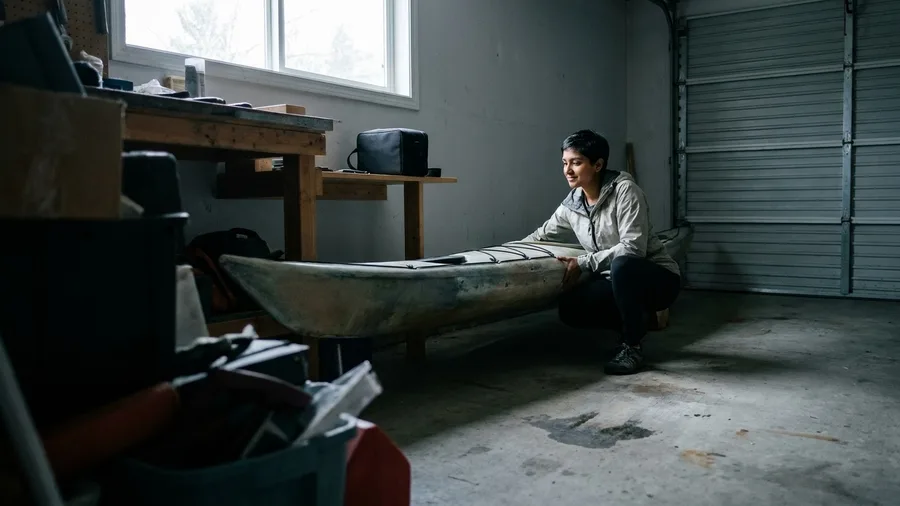
It is strange to look at a garage full of stuff you already own and still feel like you have nothing to sell. The kayak leans against the wall, the camera bag sits on a shelf, and none of it has ever paid you a dollar. That nagging feeling – all this gear, no income from it – is exactly what a rental listing fixes.
The setup is simple. You photograph the item, write the price, and post it on a rental marketplace; renters pick it up, use it, and bring it back, and you mostly answer messages. A kayak goes for $45 a day and a camera kit for $85, and a modest month of six kayak-days and eight camera-days across the two works out to about $900. That is real money for about an hour a week of handing things over and replying to texts.
The catch sits before the first booking: read the platform's damage policy and then call your own renter's or homeowner's insurer. A $2,000 camera kit drives away in a stranger's car, and the policy is what decides who pays if it comes back damaged or doesn't come back at all.
Location does more selling than effort ever will. A lockable garage near a lake, a trailhead or a city center turns that leaning kayak into bookings; take the same boat two hours from water and the requests dry up. Reach your insurance agent this week and get the coverage question answered in plain words.
9. Parking Spots and a Garage Bay
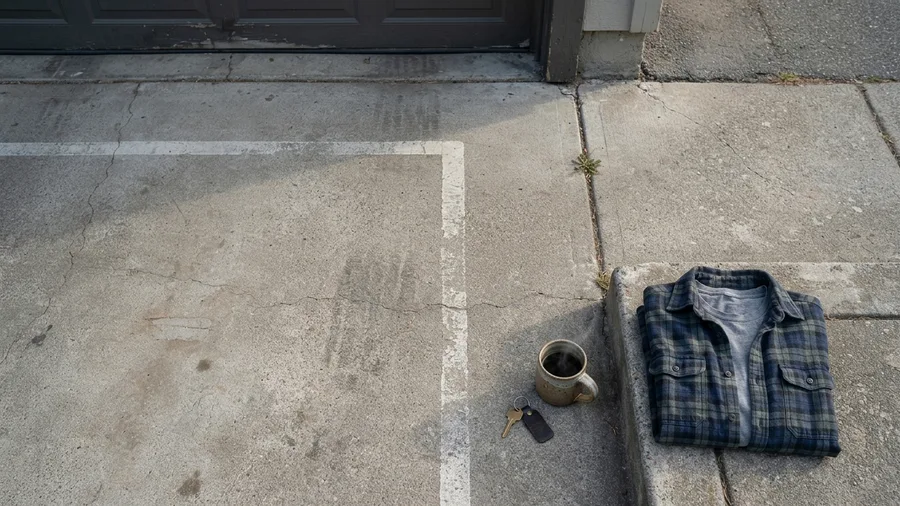
Yes, and it is the least fussy stream on this list. You list the space on a parking marketplace, and commuters, staff near a hospital or stadium, or event traffic rent it by the month. No kayak handoff, no damage policy on a camera, no gear to replace if something goes wrong – just a spot that sits empty and someone happy to fill it.
The math is almost insulting for how little work it takes. A spot in a lot like that might go for $150 a month, and a covered garage bay for $300, so three spots together reach $600 – the smallest stream in the example month, and easily the cheapest to try. Expect the first $1,000 somewhere in your first two months, and after that the whole job is less than an hour a week.
The rules are local, so check them before the listing goes up. That means the city's rules on renting out space, plus the exact wording of your lease or HOA agreement; a single hidden clause can erase the income after month one, which is why you look first and post second.
This suits a person near a stadium, hospital, campus or airport whose lease allows it. Demand is the address, not the effort – a spot two hours from everything earns nothing, and the value here is that it costs almost nothing to find out. Start smaller than you think: list one spot for one month and let the market tell you if the demand is really there.
10. A Mini-Course From Your Day Job

Sell a short course on the one thing you already do at work every day. No storefront, no inventory, no client call. You record the lessons once, list it, and the only thing that keeps running afterward is student email. It is the most ordinary asset on this whole list: a repeatable skill you have been paid to practise for years without ever pricing it as a product.
The stuck belief is that teaching needs a following first. It does not. Twenty sales a month does not come from an audience; it comes from one channel, and you probably already stand in it. A professional group, a niche forum, one search term your day job answers on a Tuesday afternoon. If you can explain scheduling to a new hire, or how you build the inspection sheet, you already have the curriculum. A stranger with the same problem will pay $79 to skip the year you spent learning it.
Now the honest part, because this entry carries the heaviest front-load in the article. Expect about 40 hours and around $600 to produce a course worth charging for: recording, slide cleanup, a checkout page, the modules laid out in the order a beginner needs them. That is a month of evenings. Twenty sales a month at $79 is $1,580, and the runway to your first $1,000 is 3 to 5 months. After it is live, the ongoing cost drops to about 3 hours a month of answering email.
So do not build the course first. The trap here is spending all 40 hours and $600 before a single person has paid, then discovering the lessons answer questions nobody was asking. Sell ten seats at $79 before you record a thing. That is $790 in hand and, more useful, ten buyers telling you exactly where they get stuck. Build the lessons around their questions and the course writes its own outline.
Forty hours of front-load buys you one of the smallest weekly hums on the whole list. That is the ratio that matters here: a heavy burst now, then almost nothing, forever, as long as the checkout page keeps working and the search term keeps sending people.
11. A Small Paid Community at $15 a Month

The belief is that a paid membership is babysitting. It can be. But a course sells once and ends, and a community charges the same teaching by the month, so both the pay and the hours climb together. My own version started as a free group I already ran; I put a $15 door on it and 120 members later it was $1,800 a month, against 5 hours a week of moderation and a first $1,000 somewhere around month six.
I thought the $15 bought access to the room. It does not. It buys a reply. The weeks I went quiet, cancellations showed up inside a month; the weeks I answered questions, nobody left. Moderation is the product, not the overhead.
That is the whole trade. Five hours a week is the price of the $1,800, and a quiet room dies.
12. A Two-Machine Vending Route

You are probably picturing a second job with a route, a clipboard and coin counting. That fear is fair, and it is also where most people quit before they start. The reality: two used machines, placed in host businesses, restocked on a route and emptied on the same trip.
The mistake people make is buying the machine first and hunting the site later. The fix is backwards. Find a break room, a waiting area, a small shop floor where staff pass the same corner daily and no machine is already there. Confirm parking, get a written agreement on the corner, and only then price the used equipment. Two machines run $2,400.
At a $1.50 average vend, a good site returns about $400 a month net, after product cost. Two sites, $800. First $1,000 in two to three months. Weekly hours: about 3, restocking and collecting.
Now the honest part. It is a route, not a hobby. A site vanishes when the business closes, moves, or changes hands and the new manager has a nephew. That income is attached to a location you don't control, and the $400 net already has product cost carved out.
Cash is where the hours actually go. Cold coin wrapping, note sorting, the slow sellers spoiling in a warm machine. That is not a detail you can skip. It is the job.
This suits someone with a car, a lockbox and tolerance for counting money at the kitchen table. It's the only stream here whose weekly hours are physical. They don't batch, and you can't pause a restock for a week without a machine running empty.
If you will drive a route and count the cash, it pays. If you want to touch it once a month, this is not the one.
💡 PRO TIP
Build the hum you can pause
Before you build anything, ask whether you can skip a week without the income stopping. If yes, it is a lazy stream. If no, it is a part-time job that happens to be at home.
Frequently Asked Questions
Is $10,000 a month realistic from side hustles?
Not from one. The example month reaches it with five stacks — newsletter, templates, print-on-demand, gear rental and parking — each built over months. Pick two to start and treat the rest as a later decision.
How much money do I need to start?
Four of the twelve cost under $50 and one costs nothing but your address. Only the mini-course and the vending route need real cash up front, at about $600 and $2,400.
How many hours a week does this actually take?
About 15 hours a week across five built streams, or 2 to 4 hours for a single one. The front-load before the first dollar is where the real hours go — plan on a few weeks of evenings for anything on this list.
Will my employer or my city have a problem with any of these?
Possibly. Parking, gear rental and vending all touch local rules, leases and insurance, and some employment contracts require disclosure. Read your lease and your contract, and ask your city before listing a space.
Do I owe tax on side hustle income?
Yes. Platforms usually issue a tax form once you pass their reporting threshold, and self-employment tax is not withheld. Set aside a fixed share of every payout and check the current IRS rules or ask a CPA.
What should I start with if I have no savings?
Templates or print-on-demand, both under $50 to start, or a parking spot if you have a driveway and your lease allows it. Put one file or one listing live at a real price before you build anything else.
No Single Hustle Reaches $10,000 Here
The verdict, plainly: no single entry on this list reaches $10,000. The largest is the newsletter at $3,400, and the example month is five streams stacked after 9 to 12 months of front-loading, settling into roughly 15 hours a week.
Route yourself by what you already have. No cash and three spare hours a week: templates or print-on-demand. Already deep in one field: the newsletter. Gear and a garage: rentals.
The suspicion about the headline was right about the number and wrong about the mechanism. $10,000 is not a hustle you find, it is a stack you assemble, and every layer was built while it was still paying nothing.
This week, one thing: put a single file or listing live at a real price. One template at $20, one kayak at $45 a day. The price is the test the whole stack rests on, so take it before you build anything else.